

Bintou’s Braids by Sylviane A. Diouf
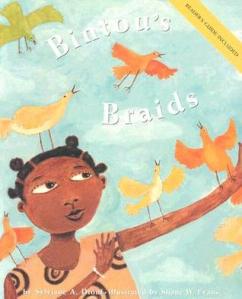 Bintou’s Braids tells the story of a little girl who dreams of being pretty. To Bintou, this means having long, flowing braids with beads and seashells attached like those of the women in her West African village. However, in her culture, she is not allowed to wear such braids because little girls were expected to focus on play and learning instead of vanity. Throughout the story, Bintou seems to wander about on the outskirts of all the celebratory happenings in her village—primarily observing the events surrounding her brother’s baptism; but she spends a good deal of the story observing and longing to experience the fine details of the elegantly braided hairstyles that the women in her village wear. Soon, Bintou becomes central to the happenings in the village when she springs into action to save the lives of two boaters.
More than a story about hair, Bintou’s Braids shares a story about loving every step of your journey—in life and in hair. I appreciated the fact that her wise Grandma Soukeye was steadfast in ensuring that Bintou held onto her youth. Bintou did not get the hairstyle of her dreams that was promised by her aunt for being a hero, but in the end, the blue and yellow ribbons wrapped around her four hair knots with birds flowing from them made her feel like a pretty little girl—a smart and brave, pretty little girl.
Geographically, Bintou is worlds apart from little girls in the United States, but her story highlights cultural diversity as well as the fact that inasmuch as we are different we share similar concerns. Credit must also be given to Shane Evans whose artful illustrations with their golden tones and rich blues complement and enliven Bintou’s dreams and life.
Highly Recommended; Ages 6+ (The text may be a bit too wordy for younger children with shorter attention spans.) (buy)
Book Review by; La Tonya Jackson
The Toothless Tooth Fairy by Shanelle Hicks
 When I first saw the cover of The Toothless Tooth Fairy, I thought, ‘Oh, the mixed girls’ version of Tinkerbell. This is the first original picture book I’ve read with a non-white magical being as protagonist. Many will see this as a simple and sweet story of a fairy’s generous heart enabling her to love her enemy and be seen as beautiful because of her kindness.
However, the tooth fairy characters are focused primarily on physical beauty. The protagonist’s name is Bella, which means “beauty.” The setting for this story is the fairies competing in a beauty contest. At the outset, the narrative states “Every tooth fairy was certain Bella was going to win. She was beautiful. She had long, curly brown hair, and her teeth were perfect,” This language coupled with all the other fairies’ hair styled in buns, pigtails, afro-puffs, ponytails, or pulled back, reinforces the concept that there is only one way to be beautiful—with long flowing hair—and only Bella inhabits that beautiful space.
Even though the next sentence says, “the most beautiful thing about Bella was her kindness,” the first action we see from Bella, instead of this kindness that is supposed to be her greatest feature of beauty, is Bella smiling and showing off her flight skills to the contest judges. Although the book’s message is that kindness is more valuable than physical beauty, the prominent importance of physical beauty that conforms to a European ideal will obscure the message of kindness for the reader under 6. Furthermore, this will impress upon readers of all ages that kindness does not make a person beautiful; it only makes those who are already conforming to European standards of beauty even prettier.
In the narrative, Bella is a tooth fairy whose enemy causes her to fly into a wall and lose a tooth during a prettiest smile contest. So she can look perfect, Bella, in turn tries to steal a tooth from three of the kids on her list who will be losing a tooth soon. The text says she is going to borrow the tooth and leave an I.O.U. behind but her ‘borrowing’ entails pulling these children’s teeth from their mouths with thread and pliers. While her actions to get these teeth are funny, there are no direct repercussions for Bella’s thievery and no consideration of the way the two brown girls from whom she steals teeth will feel when they wake up without their teeth.
Ultimately, Bella fails to steal a healthy tooth. When Bella fails to steal a usable tooth, she still comforts Zelda, her enemy who seems to be crying but Zelda is not really crying—she just pretends to cry to get Bella’s attention then she taunts Bella in response to Bella’s kindness. Bella’s tears of defeat turn Zelda into a monstrous witch but Bella hugs Zelda the witch until Zelda becomes normal, and then a “most beautiful, nice fairy”. After this, the contest judges decide there are two beautiful winners of the contest—Bella who is balanced because of her powerfully kind heart and Zelda, her nemesis who is redeemed by Bella’s kindness.
While the nemesis, Zelda, is pink and red in complexion, costume, and hair, she has a Caucasian dominant phenotype and she is the only fairy other than Bella who actually speaks or takes any individual action in the story. Although the other fairies represent every continent’s nationalities and ethnicities, all the other fairies are a silent ensemble nearly melting into the background of the story.
Recommendation: If this story fits within your value system, it is unique and valuable for children of color to see themselves in books as leaders of magical beings.
Justice Pon di Road by Aliona Gibson
 What I like about this book more than anything is the idea. A single mother who lives in the United States with her son Justice, takes him on a trip to her Jamaican homeland where he is immersed in a new culture and learns a new language. While they are walking along the roads (pon di road), they meet a variety of adult characters running businesses from small shops or road side stands. Justice gets to try new types of food and meet people who instantly adore him as he learns new phrases. The tone of the narrative voice is fun and I find it appealing that there are positive representations of entrepreneurial black Jamaicans, as well as positive representations of African Diaspora people with uncombed, natural kinky, coily hair and dread locks. Also, there’s a great historical timeline and glossary in the back of the book, which are valuable teaching tools.
What is not appealing is that the narrative is just too long for this story; the illustrations which look like prematurely exposed film photos are often eerie, the detail is difficult to see, and are often not well paired with the narrative. The discontinuity of the illustrations often occurs because one page of the narrative will go on and on and the only thing illustrated is the experience Justice had in the first paragraph or first sentence. I think if a teacher is looking for a way to make a history lesson on Jamaica or the Caribbean fun, sharing the first few pages of this book and the rich glossary and history section in the back with a classroom would be valuable. The simple tone of the narrative and the stroller riding toddler protagonist indicate that the story is targeted to ages 1-5 but the length and history section are more appropriate for ages 7-9. I don’t know if the narrative will hold the attention of either age group for its entirety but an adult who reads the book in advance and edits the story for their child’s attention span will share a unique story with their child and learn more about Jamaica than just the music with which we are familiar.
Recommendation: Recommended for educational purposes to adults who will work around the narrative. Ages 2-9.
Reviewer: Omilaju Miranda

Diversity Children’s Books Website is Live
Mixed Diversity Children’s Book Reviews is officially a website: http://mixeddiversityreads.com/.
 The Website, which founder Omilaju Miranda began as a page on facebook is now a full website with blog where you can find books with diverse protagonists by specific category. Books are easily locatable on a drop down menu. The site is dedicated to listing and reviewing children’s and YA books with protagonists who are either: biracial/mixed, transracial adoptee, bilingual, lgbt-parented, single-parented, or gender non-conforming. There is also a magazine where the site will feature writing for, and by children, and an opportunity for parents to send in photos and videos of their children reading or reciting stories and poems. Check out the book site and find the book for your little one today. If you are a writer or interested in communications and publicity, the site is actively seeking children’s book reviewers and interns to publicize and network with schools and libraries.
My Hair is So Happy by Nik Scott
 I thought any little girl with curly hair would love seeing images similar to herself in this book. My first response when I read it was “I love these illustrations.” As I read, it was exciting to see four girls representing nearly the full spectrum of skin tones and hair textures found amongst African Diaspora and African Diaspora mixed heritage kids. The writing makes a well-intentioned commitment to reforming the language of curly hair from “nappy” to “happy”. There is no story here though and no character-based reasons for a child to attach to any of these characters. Many will find it disconcerting that, in a book that seems to celebrate unity and self-love, the characters are participating in a beauty contest. Although they are all wearing tiaras and “Lil’ Miss Curly” sashes, we all know that competition means someone must be judged better or more beautiful than the other. Also, depending on one’s beliefs, there is language of being “fearfully” made that may be inexplicable to your children. When I read the book to my three-year-old, she asked why the girl was happy, was more interested in the dog in the illustrations and started chanting “My Hair is So Angry.” If I were a child psychologist I would analyze my daughter’s responses and offer insight into how other little girls might respond to this book but I’m not. As a reader and writer, I say the illustrations in this book offer images showing girls enjoying all aspects of life while leaving their hair curly and parents can create many conversations based on these images.
Recommendation: Recommended. We rarely see these many representations of different types of curly-haired children on the page and these girls are also happy and happy about their hair so if that is valuable to your little one, buy the book.
Book Review by Omilaju Miranda.

I Love My Hair by Natasha Anastasia Tarpley
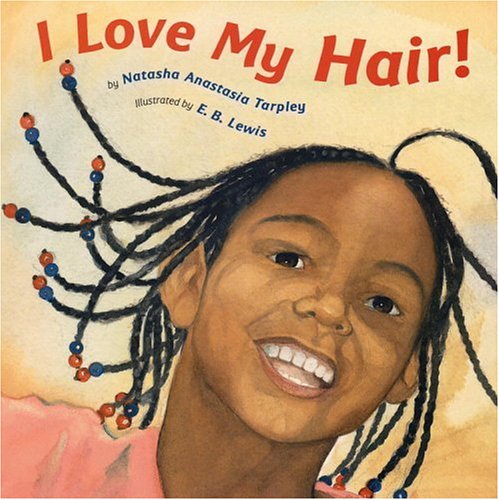 This board book is a first person narrative that lets you hear the defined voice of a child on a journey of loving herself led by her own mother’s love. The book doesn’t fall into the categories to which this page is dedicated however, it is a wonderful celebration of the realistic challenges and versatility of Afro-curly/ kinky coily hair that I think many on this page will find value in reading it with, and for, your children with Afro-curly hair. Discussing everything from necessary oils, the occasional tear-inducing pain of combing and the wonder of hair that braids well, curls into the air and afros out, If you are looking for a resource outside of yourself to validate the natural beauty of your child’s hair, this is one of the best books I’ve seen. As there is no father mentioned, single mothers can enjoy this book as a reflection of their relationship with their children as well.
Recommendation: Highly Recommended; Ages 4+
Reviewer: Omilaju Miranda

From the Bellybutton of the Moon/ Del Ombligo de la Luna And Other Summer Poems/ y otros poemas de verano by Francisco X. Alarcon
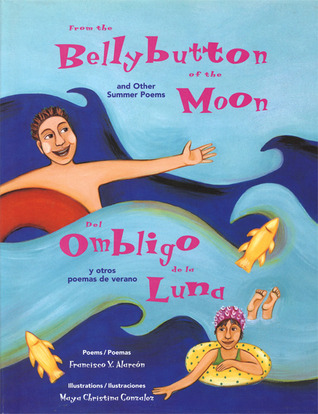 This is a book of free verse poems about the poet’s childhood experiences in nature, travel, and with his family during his visits to his grandparents’ home in Mexico. The poems are filled with simple vignettes of imagery. They are printed first in Spanish then in the English translation. All poems are accompanied by vivid oil painting illustrations. This is a great book to introduce middle school and older elementary children to free verse poetry while imparting the wonder of being a part of the life of grandparents in a different rural country every summer. All children who spend extended vacations with family members during the summer will relate with these poems of familial love and journey and those who visit Mexico will enjoy this celebration of the rural Mexican landscape, lifestyle and Mexican culture.
Recommendation: Highly Recommended; Ages: 8+
Book Reviewer: Omilaju Miranda

Dumpling Soup by Jama Kim Rattigan
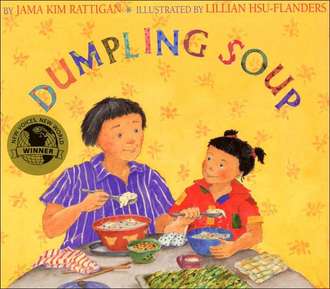 This first person narrative peppered with words from four different languages and a prominent grandmother character who speaks Korean almost every time she talks, was the 1990 winner of the New Voices, New World contest. Marisol, the protagonist narrates with such open vulnerability that the reader becomes easily attached to the story of her Hawaiian family’s New Year’s eve and her first time making dumplings for the Dumpling Soup, which is the most important first meal of the New Year. I can not say any better than the publisher that “Dumpling Soup is a rich mix of food, language, and customs from many cultures—Korean, Japanese, Chinese, Hawaiian, and haole (Hawaiian for “white”) The distinct traditions and heritage of each culture are not forgotten but play a vital part in this close-knit family’s life.” As cousins, aunts and even the grandmother of various heritages bring their different, ethnically distinct foods, speak their different languages, and use their different recipes and techniques for making dumpling soup to the protagonist’s and then, the grandmother’s home, readers from around the world see the reality of recognizing and loving people with, and for their differences instead of for the ways they are the same.
One of the small details that parents can discuss with their kids is the character Maxie. This is a cousin who the protagonist describes as haole but whose phenotype is Asian. The illustration of this cousin presents a great opportunity to discuss how people think of race and ethnicity differently i.e. how for this Hawaiian family, “white” is Asian, also. Because Marisol tells this story with the joy of participating in a family celebration and the anxiety over participating on a big girl level in that celebration, even as she carries us through the different scenes of the family fun, we never forget that Marisol’s sense of accomplishment and feeling of being valuable within the family depends on the decision her grandmother will make about whether or not to serve the dumplings that Marisol made. Accompanied by emotionally transparent illustrations, this is a beautifully told story that you and your child will enjoy.
Recommendation: Highly Recommended; Ages 4-adult
Reviewer: Omilaju Miranda
Oprah: The Little Speaker by Carole Bosaton Weatherford
 This book about the first six years of Oprah Winfrey’s life, being raised by her single grandmother has received strong reviews from the School Library Journal and Booklist. The book presents Oprah as a child who knew she was special and wanted to be paid to speak as her career; her childhood vision came to fruition once she was an adult. The illustrations are inspiring with language accessible and inviting to small children.
Recommendation: Highly recommended; ages 5+
 Diverse Kids Books--Reviews