

All Families Are Special By Norma Simon
 In addition to portraying families of various ethnicities, All Families are Special shows just about every kind of family: children raised by grandparents, same-sex parents, widower, absentee parent, adoptive parents, unmarried parents, divorced parents, remarried parents, immigrants, and a family with pets. It goes beyond simple listing, however, and addresses the universal sad times and happy times that all these families can experience.
Reading and hearing about all types of families can help readers become more open-minded, and any child who’s part of one of the familial structures listed will feel included and validated. A further value to this book is that it shows that these diverse families go through a lot of the same experiences. Child psychologist Bruno Bettelheim wrote of the value of fairy tales and children’s literature—they help children clarify their emotions and recognize their difficulties. This value is present in All Families Are Special, which reminds children that “When there are bad times, families help each other to feel better” and “When there are good times, families enjoy them together.”
Recommended: 5-8 years
Book Reviewer: Yu-Han Chao

December 13th, Atlanta, Ga: African Biracial Orphan Author Launches Two Family History Picture Books
 Nigerian-Hungarian Author Theresa Mamah has lived in the United States since she and her twin were orphaned at 13-years-old. The daughter of a Nigerian father and Hungarian Mother, Mamah knew Nigeria as home and Hungary as a destination for maternal-side family reunions and vacations. Preserving the family stories from both sides of her family has been the passion driving her creative endeavors and culminated in the publication of two children’s books, Ice and What the Baby Saw.
 She introduces both to the United States Reader at the book Launch, on Saturday afternoon, December 13th where she will be reading from, and signing copies of both books. Full information is on the featured poster and you can RSVP for free to attend. The book launch is from 1pm-4pm. Take your children out for an afternoon of literary fun featuring stories of international, intercultural focus
 Ice is the story of Mamah’s father as a child in Nigeria discovering ice for the first time and
What the Baby Saw is the story of Mamah’s aunt protecting her mother during WWII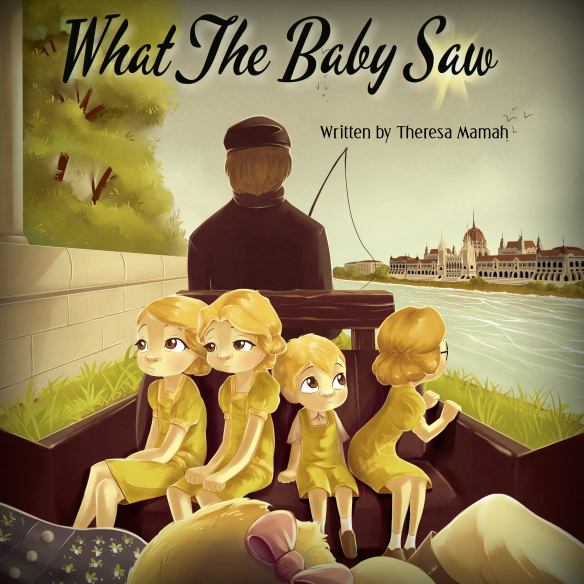
RSVP for book launch.
Best-Selling YA novelist Heidi Durrow Discusses Multiracial Identity with Omilaju Miranda of Mixed Diversity Reads
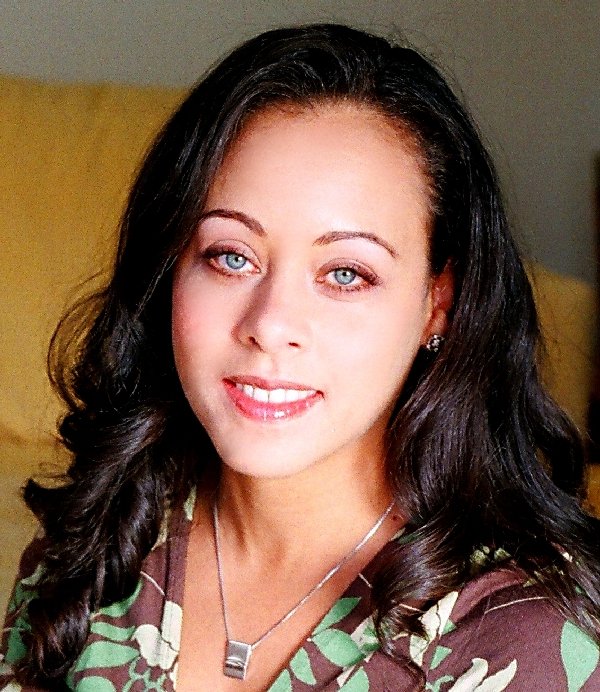 Heidi Durrow is a super woman. The New York Times best selling author of the 2008 PEN/Bellwether award winning The Girl Who Fell From The Sky, that gained unintended popularity amongst the YA audience is also an ivy-league and Stanford University educated lawyer, and journalist who hosts the national podcast ‘The Mixed Experience‘ and organizes the annual Mixed Remixed Festival, celebrating the arts produced by biracial and multiracial peoples.
On November 14th, Durrow, who is the daughter of a white, Danish mother and black, U.S.American father, interviewed Omilaju Miranda, founder of Mixed Diversity Reads Children’s Book Review, ostensibly to discuss Mixed Diversity Reads Children’s Book Review as a resource for those seeking picture and YA books with mixed heritage protagonists. 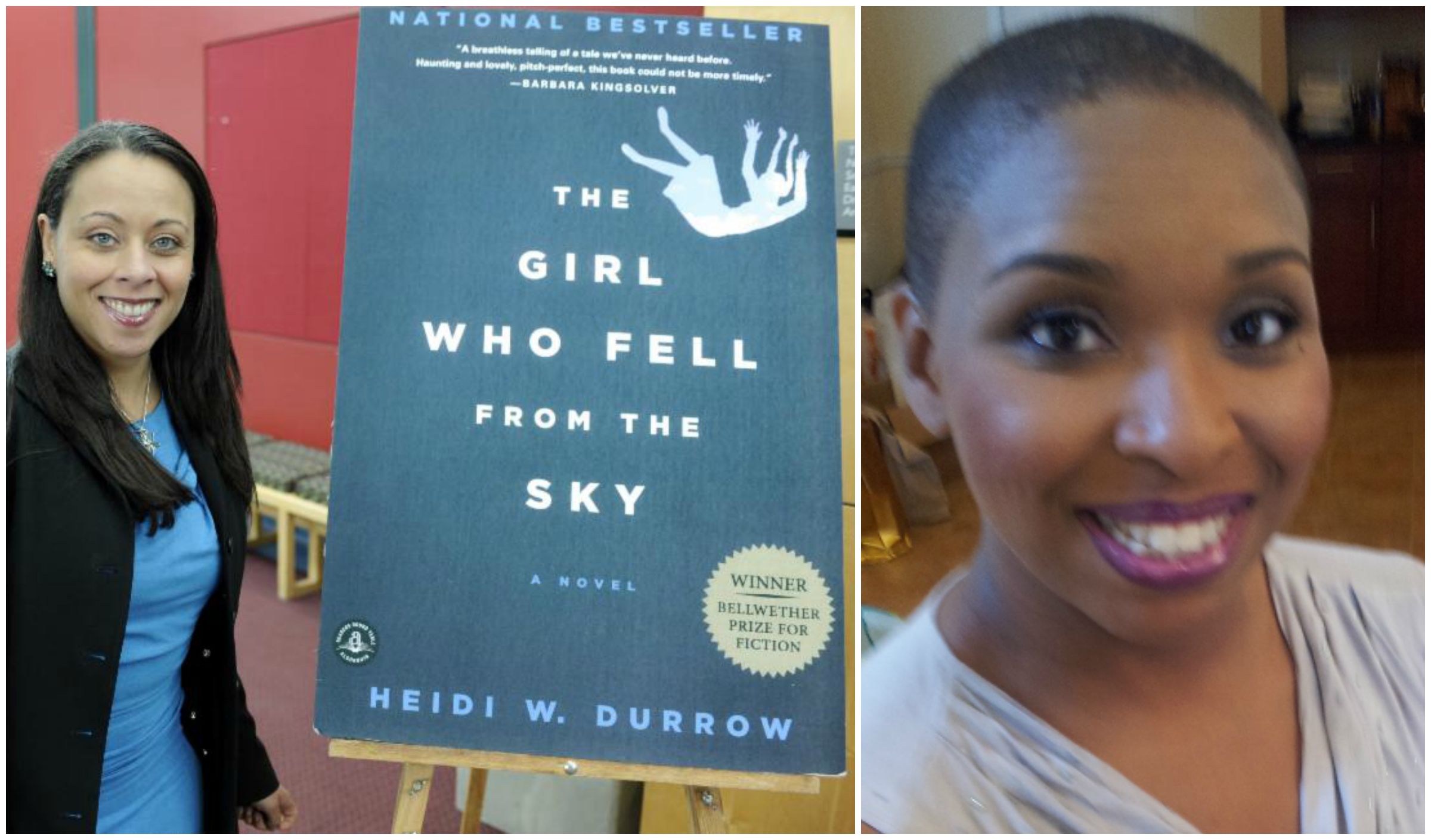
But the conversation veered into an unplanned discussion of multiracial U.S.American identity as well as literacy and representation in children’s literature. Listen to the interview here and become a new fan of ‘The Mixed Experience‘ Podcast. Follow Heidi at @heididurrow and the Mixed Remixed Festival at @mixedremixed or on facebook at Mixed Remixed.

A Gender Creative Child’s Anthem in a Picture Book
Across the country, as trans-identified and gender non-conforming children and teenagers are supported in living their affirmed gender identities, many are finding their anthem in an illustrated songbook by Phyllis Rothblatt:

Mixed Diversity Reads Children’s Book Reviews’ Interveiw with Phyllis Rothblatt
 Omilaju Miranda of Mixed Diversity Reads Children’s Book Review who fell in love with the book upon reading it, had the pleasure of speaking with author, activist, and child and family therapist, Phyllis Rothblatt about her book and the victories and challenges of the movement to respect (not just tolerate) the identities of gender creative and gender non-conforming children and teenagers.
MDRCBR: What Inspired You to Write All I Want To Be is Me?
Rothblatt: I knew a lot of children who didn’t fit inside of typical gender boxes— they expressed their gender identity in more fluid ways, or, perhaps they didn’t identify as either a boy or girl. I knew children who felt like a blend of both genders, and those who felt that their body didn’t match who they really are inside and that they are really the other gender. I didn’t see anything available in children’s literature that affirmed or reflected these gender creative kids or their experiences. I wrote, All I Want To Be Is Me for these kids- they inspired me. Their intense determination to be themselves, even when no one else understood them or supported them- I found that inspiring and so courageous.

A Talk with the Author: Madhvi Ramani brings new book Nina and the Magical Carnival to life with a “live” reading and interview.
 Author Madhvi Ramani has brought us three delightful, globe-trotting journeys featuring mystery solving, elementary school protagonist Nina who goes on adventures around the world in her aunt’s magical travelling spice shed. The child of immigrant parents from India, Nina is a first generation Brit trying to excel at school, avoid bullies and define her cultural identity in a way that honors who she really feels she is and isn’t too offensive to her family. In the first two books, Nina’s trips to India and China helped her solve some extraordinary problems. In the third novel, Nina travels to Brazil.
Today, the author reads us the first chapter of the third book in the series: Nina and the Magical Carnival, which gets released in the United States today, just in time for winter holiday gifting.
In addition to reading us the first chapter of her new release, Ramani took the time to discuss diversity in children’s literature and her debut novel, Nina and the Travelling Spice Shed.
Support diversity literature and give the young readers in your life some great reads by buying all three titles or just the new release, Nina and the Magical Carnival.
Nappy Hair: Performance and Discussion with Professor Neal Lester and Author Carolivia Herron

Listen to the Call and Response Performance of Caroliva Herron’s children’s book Nappy Hair. Listen to minutes 5:10–10:38.
Also, read our review of Nappy Hair.
Listen to Carolivia Herron speak about the evolution of the griot’s telling of this story at minutes 19:59-21:42
How Common Core’s book choices fail children of color
** Children must be able to envision possibilities for their futures. And they must fall in love with books. Culturally relevant books help children discover a passion for reading.**
In the late 1970s and early 1980s, researchers asked, “What do good readers do?” They found that good readers make connections to themselves and their communities. When classroom collections are largely by and about white people, white children have many more opportunities to make connections and become proficient readers. Appendix B of the common core []consistently marginalizes multicultural children’s literature: book lists, school book fairs and book order forms, literacy textbooks (books that teach teachers), and transitional books (books that help children segue from picture books to lengthier texts). [] we must stock classrooms with mirror books for all children. This change in our classroom libraries will also allow children of the dominant culture to see literature about others who look different and live differently.
A second reason we must ensure that all children have mirror books is identity development. They must []see[] artists, writers, political leaders, judges, mathematicians, astronauts, and scientists [that look like them]. They must see authors and illustrators who look like them on book jackets. Children must be able to envision possibilities for their futures. And they must fall in love with books. Culturally relevant books help children discover a passion for reading.

The Common Core has become a hot-button political issue, but one aspect that’s gone lar gely under the radar is the impact the curriculum will have on students of color, who now make up close to 50% of the student population in the U.S. In this essay, Jane M. Gangi, an associate professor in the Division of Education at Mount Saint Mary College and Nancy Benfer, who teaches literacy and literature at Mount Saint Mary College and is also a fourth-grade teacher, discuss the Common Core’s book choices, why they fall short when it comes to children of color, and how to do better. Originally posted at The Washington Post, this article was reposted with the permission of Jane M. Gangi.
Children of color and the poor make up more than half the children in the United States. According to the latest census, 16.4 million children (22 percent) live in poverty, and close…
View original post 1,108 more words

Calling the Doves By Juan Felipe Herrera
 California poet laureate Juan Felipe Herrera shares the story of his migrant farmworker childhood through powerful language and colorful illustrations (by Elly Simmons) in Calling the Doves.
Not once is Juan negative about his humble beginnings; he fills these pages with love and poetry. Born on the road to migrant worker parents in central California, Juan grew up in a one-room house his father built on top of an abandoned car he describes as “a short loaf of bread on wheels.” His father makes bird calls that attract doves and his mother recites poetry at dinner, all of this inspiring him: “I would let my voice fly the way my mother recited poems, the way my father called the doves.”
While the language is always evocative, one particular metaphor may confuse readers. All other metaphors work beautifully, for instance, he describes a green canvas as “a giant tortilla dipped in green tomato sauce,” and ”the wolves were the mountain singers.” However, when describing his family eating outdoors, “the sky was my blue spoon, the wavy clay of the land was my plate” may be taken literally by children (and some adults) who might have trouble making sense of these lines.
Besides that instance, this lyrical story accompanied by striking illustrations tell a story rarely seen in children’s literature, from immigration to migration according to the seasons of melon, lettuce, and grapes, to traditional healing arts. A wonderful celebration of migrant and Mexican-American culture, this book is a great way to teach your child poetry as well as diversity.
Recommendation : Highly Recommended. 6+
Reviewer: Yu-Han Chao

Jeremy’s Dreidel by Ellie Gellman
 It is Hanukkah season and the Jewish Community Center is hosting a dreidel workshop and Hanukkah celebration to mark the occasion. All the children have grand ideas for making their dreidels unique including Miriam’s “green” dreidel made from recycled materials, Jacob’s singing one made from an old music box, David’s bouncing dreidel made from a rubber ball, and Jeremy’s Braille dreidel. Jeremy’s choice of material, clay, initially does not seem as interesting as that of the other children. However, as he begins to model his clay dreidel with mysterious dots, the other children in the workshop soon recognize its uniqueness and, in the process, they learn a lesson about Braille, blindness, and what it means to have a parent who is blind. (more…)
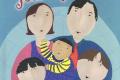
Rebecca’s Journey Home by Brynn Olenberg Sugarman
 Rebecca’s Journey Home tells the story of the author, Brynn Olenberg Sugarman, bringing home her daughter Rachele (“Rebecca” in the story) from Vietnam. Instead of the “Sugarmans”, the family in the story is the “Steins”. While the title centers on “Rebecca”—the Vietnamese adoptee, the story speaks more of the family’s adoption journey. Therefore, young siblings anticipating the addition of an adopted child into their home (or young siblings recently experiencing such an event) can especially identify with this story. (more…)
 Diverse Kids Books--Reviews