
Home » grandmother grandfather (Page 3)
Category Archives: grandmother grandfather

Molly Bannaky by Alice McGill
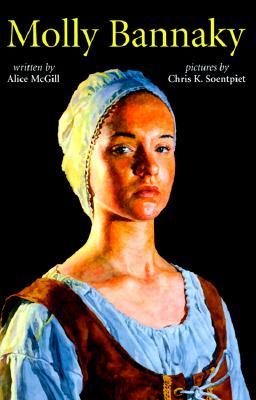 With an awe-inspiring light touch that manages to impart the oppressive colonial history of indentured servants and African slaves without sugar coating or overwhelming the young reader with the harsh realities of this period of history, Alice McGill writes the love and family story of former indentured servant, Molly Walsh and her formerly enslaved husband Bannaky—the grandparents of Benjamin Banneker. Chris Soentpiet’s water color paintings provide an evocative illustration for a story whose complexity holds the reader’s emotional commitment from the first to last page. You feel the griot that is author Alice McGill as you read Molly Bannaky. Every classroom should have a copy of this mini-biography of one of history’s women of strength and every household with or without children should have a copy of this book on its shelves. Not a bedtime story but a story to be read and discussed.
Recommendation: Highly Recommended; Ages 6-10
Reviewer: Omilaju Miranda

Becoming Naomi Leon by Pam Munoz Ryan
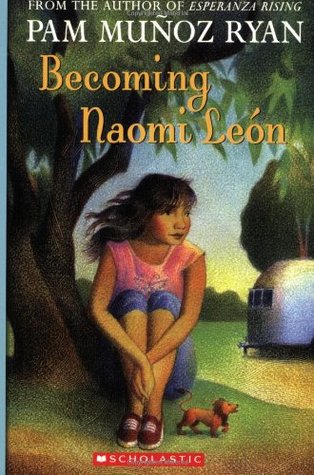 Naomi Soledad Leon Outlaw is a ten year old girl who lives with her great-grandmother and disabled brother in Avocado Acres Trailer Rancho in Lemon Tree, California. She hasn’t seen her mother in seven years, and her father is in Mexico. Naomi is an avid reader, list maker and soap carver who is devoted to her family and loves works. Her world transforms one afternoon when her glamorous looking mother, who has changed her name from Terri Lynn to Skyla, shows up unannounced with armfuls of gifts. Although Naomi is thrilled to meet her mother, she feels overwhelmed. When it emerges that Skyla is an alcoholic who has been in and out of rehab and that she not interested in Owen, Naomi’s brother, because has a disability, Naomi becomes quickly disillusioned.
The novel follows Naomi’s coming of age story and her development into a young woman. Her unconventional family is made up of her great-grandmother and brother, but also includes her neighbors from Mexico, and her estranged father. In an effort to reconnect with the children’s father – and to thwart Skyla’s attempts to take Naomi from her home – their great-grandmother takes them on an impromptu road trip to Mexico in their airstream trailer, named Baby Beluga. They arrive in the country right before La Noche de los Rabanos, The Night Of The Radishes, a Mexican festival where carvers create elaborate artwork out of radishes. The Leons, they find out, are renowned as carvers, and Naomi experiences a deep cultural immersion in discovering her Mexican roots, wearing a traditional Mexican Village woman’s blouse and huraches, and carving radishes with her friends.
‘Becoming Naomi Leon’ is a poetic, poignant novel with excellent character development and gentle treatment of difficult subject matter. It’s a classic coming of age story that incorporates the positive aspects of cultural mixing, and handles this complex family structure with grace and insight. The discovery of the long lost Mexican father is the highlight of the narrative.
Recommendation: Any advanced reader will enjoy this book, which could also be a good book to read to a child who is ready for chapter books to read aloud.
Book Reviewer: Jill Moffett
Grandfather Counts by Andrea Cheng
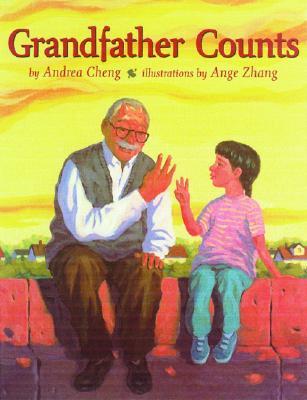 As simple as the language needs to be for a child to easily connect with the narrative, this story is dynamic in its attention to a child facing major changes in her home life when her grandfather arrives from China. Not only does Helen, our protagonist, have to give her up her bedroom and her view of the cargo train that runs outside of her room but, her mother becomes a perfectionist, and her grandfather’s is nearly mute in the household because he doesn’t speak English. But Helen, a little lost in her relationship with her grandfather, is persistent in observing him and trying to connect with him. Ultimately, she makes the connection by mistake in a sentimental manner that I felt was “sweet”. Like her, her grandfather likes watching the trains; together they count the cars and teach each other English and Chinese. Towards the end of the story, the family commits to privately learning Chinese through a computer program her Euro-American father has purchased; one gets the feeling that Helen and her grandfather are going to feel “at home” again. I was gratified to see this book give attention to the American Chinese children who don’t know Chinese and didn’t “fit in” at Chinese language school because the dominant narrative of Asian life still seems to be the immigrant story and first generation story of children who are fluent in the Chinese language. Helen and her siblings are first generation American children of mixed Euro and Chinese heritage who, despite her parents attempts to integrate Chinese culture into their lives, are not immersed in Chinese culture. Any child of immigrant parents whose lives make them consider themselves American descendents of their parents’ culture instead of members of the non-United States culture, will identify with Helen and see something of themselves in Helen’s story. All others will enjoy observing Helen’s lived identity and the multigenerational bonding experience in this simply told, complex story.
Recommendation: Highly Recommended; ages 4-8
Reviewer: Omilaju Miranda
Dream Dancer by Jill Newsome and Claudio Munoz
 A ten-year-old dance prodigy who happens to be of mixed heritage (Latina and white) breaks her foot and goes through the emotional and physical process of recovery until she can dance again. I say “happens to be” because her ethnic heritage is never discussed in the book; we just see her parents and grandmother are of different races. Easy language and an enchanting storyline tell of Lily’s transference of her emotional attachment to dancing to dancing doll. Breezy, evocative writing and illustrationcarries the reader through Lily and her doll’s experience in this story that portrays a child literally falling and getting back up again on a grand scale and rebuilding her dreams.
What A Family! By Rachel Isadora
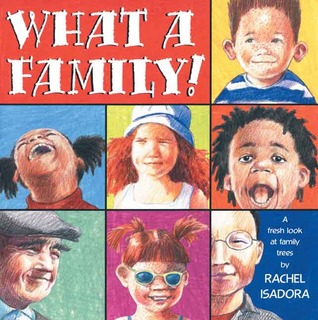 From hair to toes, cousins share similar features even when those cousins appear to be of different racial heritages. In this book, lively illustrations and funny descriptions of common and rarely thought of characteristics are an alternative way to read a family tree. The book shows several generations of the family highlighting the physical links across generations of cousins.
Recommendation: Highly Recommended; Ages 2-10
Reviewer: Omilaju Miranda

The Other Half of My Heart by Sundee T. Frazier
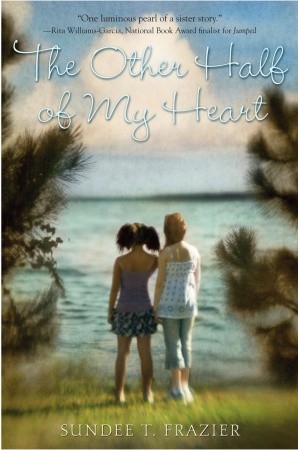 Have you ever read one of those books which prompts such a good discussion you begin planning how to give it as birthday present to your child’s friends? Or you find yourself suggesting it to random bi-racial families at parties? Well, that is how The Other Half of My Heart by Sundee T. Frazier hit me.
Minni and Keira King, 11-year old fraternal twins shake up people’s ideas of genetics and how bi-racial siblings should look. Born to a Caucasian dad and an African-American mom, Minni has red hair and light skin while Keira has tight afro puffs and dark skin. The girls live in a mostly Caucasian town in Washington State, but for the summer they are traveling to their maternal grandmother’s hometown in North Carolina to enter Miss Black Pearl Preteen of America Pageant, just as their mom did as a girl. The change in location offers a big change in demographics and stirs up issues between the girls. Minni wonders if she will be “black” enough. Keira is excited to finally be in a place where she can shine.
Part of their father’s reason for wanting to send them to the South was so they can get in touch with their black roots and their mother’s family, and the girls do. Both girls hear family stories and spend time looking at old photos of family members with varying degrees of skin tone. Minni has a particularly moving experience in church listening to the choir sing and being part of the community. Later, the girls’ grandmother, Minerva Johnson-Payne, surprises them with a photo of her sitting behind Dr. Martin Luther King, Jr. Grandmother Johnson talks of her experience as one out of five African American teachers at an all-white school and how hard she worked to prove “quality is colorless”. Although not her intent, it is the girls’ grandmother who educates the reader on the subtle ways African-Americans are made to feel inferior to Caucasians. She is always reminding Keira to put on sunscreen to avoid letting her skin get any darker. She also takes Keira to a salon to get her hair relaxed, even though their mother is completely against it. Not until the end does Minni build enough confidence to confront her grandmother about her hurtful comments toward Keira.
Even though I do love the concept of this book, I have a couple of criticisms. Grandmother Johnson never has enough story time to redeem herself. The girls rebel against her old-fashioned, strict ideas and domineering ways by pranking their grandmother and making fun of her behind her back. I wish the author had spent less time setting up the pageant and more time allowing for the girls and their grandmother to truly connect and understand one another. The story is told from Minni’s point of view, yet I think with more from Keira the story would be much richer with many avenues for young readers to identify with both sisters. And the mom just plain bothers me. It seems her method of protecting her children from possible hurt is to hide them away. There are no photos of the girls in the media, even though they are world famous for their opposite features. She seems to want to avoid the topic of race instead telling them they are not a color but strong humans. While this may be told with good intentions, this approach does not serve them well as they face the world outside their little foursome. In fact the girls seem completely unprepared for how to deal with questions regarding their looks and the feelings stirred up when they are affected by racism.
Even though this book focuses on black-white dynamic, I believe it brings up many great topics all families of mixed heritage will face.
Recommendation: I highly recommend this book for readers ages 9-13.
Book Review by Amanda Setty
 Diverse Kids Books--Reviews