
Home » Posts tagged 'Black' (Page 2)
Tag Archives: Black

Josephine by Patricia Hruby Powell and Christian Robinson
 A free verse prose poem tells the life story of the first black American international musical superstar Josephine Baker, born out of wedlock and raised in part by a single mother. Collage drawings give the book a rich tactile feel that almost transcends the flat page. The language, which tells the story of Baker’s creativity and success amidst the U.S.’s violent racism is continuously evocative. While the images are fun to look at for all ages, only children ready to learn about racism, race riots, and shadism should read the book, as those harsh realities made a huge impact on Josephine Baker’s life and career, and are represented in heartrending language and images in the book. This is a beautifully told story that will tempt both the child who loves, and the child who hates reading and poetry, to become a poet. Verse after verse, the reader will learn of Josephine’s courage, and her fierce determination to be center stage as the dancing star she believed she could become. Those afraid to move on to middle school, go off to boarding school, or attend a training camp for their sport or art will see in Josephine, a girl so committed to the fulfillment of dancing that she left home at thirteen-years-old to tour the country, and left her husband for Broadway when she was only fifteen-years-old. Those who never consider the power of humor will learn how Baker attracted the spotlight with her comedic facial expressions as she danced. Her dynamism will inspire the reader learning of her many landmark performances, as well as her choice to become a pilot and fight as a spy against the Nazis during WWII. With dramatic punctuations in the poetic language, the author tells of Baker’s economic fall, and how bankruptcy proved to be a painful lesson in excess for the generous humanitarian. But Powell makes sure the reader knows that Baker was a socially conscious performer. At one point the richest Negro woman in the world, Baker was a civil rights fighter who convinced the army and many venues to allow integrated audiences to attend her performances, and even convinced owners of segregated corporations to hire blacks. The language and illustrations will make you feel Josephine’s life— her ups and downs, her ultimate triumph in achieving every dream she had, including dying “breathless, spent, after a dance.” (buy)
Recommendation: Highly Recommended; Ages 10+

Diversity Children’s Books Website is Live
Mixed Diversity Children’s Book Reviews is officially a website: http://mixeddiversityreads.com/.
 The Website, which founder Omilaju Miranda began as a page on facebook is now a full website with blog where you can find books with diverse protagonists by specific category. Books are easily locatable on a drop down menu. The site is dedicated to listing and reviewing children’s and YA books with protagonists who are either: biracial/mixed, transracial adoptee, bilingual, lgbt-parented, single-parented, or gender non-conforming. There is also a magazine where the site will feature writing for, and by children, and an opportunity for parents to send in photos and videos of their children reading or reciting stories and poems. Check out the book site and find the book for your little one today. If you are a writer or interested in communications and publicity, the site is actively seeking children’s book reviewers and interns to publicize and network with schools and libraries.

All the Colors of the Earth by Sheila Hamanaka
 Poetically, the children of this book become the natural bounty of the earth, their skin color and hair textures compared to the beautiful colors of nature and hair compared to the textures of other living creatures.
With typical sentences/stanzas like,
“Children come in all the colors of the earth—
The roaring browns of bears and soaring eagles,
The whispering golds of late summer grasses,
And crackling russets of fallen leaves,”
a child is able to glean a confidence-inspiring insight into their physical look. This is a beautifully illustrated book that lives up to the lyrical poetry of its narrative. The illustrations go far beyond the normal representation of the human rainbow and, with very detailed rendering of facial characteristics, skin complexions and hair textures, the reader sees real differences in many, many different ethnic types. On the pages of this book, children of every ethnic heritage will find reflections of themselves enjoying life and the world around them. While every physical type of child is represented in ‘All the Colors of the Earth,’ only interracial families are represented, which I think is an exceptional and novel choice however disappointingly inconsistent with the universal inclusiveness of the other illustrations.
Recommendation: Highly Recommended; Ages 3+
Book Review by Omilaju Miranda.

Jackie’s Gift by Sharon Robinson
 When Jackie Robinson bought his first house in Brooklyn, NY, some people in the neighborhood sent around a petition trying to keep him and his family out because they were black. It failed and upon moving in, the first friend Jackie Robinson made was a young Jewish fan, Steven Satlow. Steve comes over and helps the Robinson family decorate their Christmas Tree. When Robinson learns that the Satlows don’t have a Christmas tree, he thinks it is because they can’t afford one and buys them a huge Christmas tree. The Robinsons end up learning about a new religion and culture and both the Satlows and Robinsons demonstrate communicating with grace and appreciation in the face of misunderstanding. Ultimately, out of appreciation for Jackies gift, the Satlows chose to have a Christmas tree and a Menorah for Hannukah that year and the Robinsons learned that Jews don’t celebrate Christmas. Written by Jackie Robinson’s daughter, Sharon who writes in the afterword that the Satlows and Robinsons are still friends.
Recommendation: Highly Recommended; ages 5+
Book Reviewer: Omilaju Miranda

Shades of Black by Sandra L. Pinkney
 This seems to be one of the most celebrated books of the early 21st century for speaking to children about color, race and having pride in one’s Black identity. When I asked people for help in the face of my daughter having trouble from other kids regarding the difference in my and her skin complexions, everywhere I asked, several people suggested this book. It is a photo essay, that on an elementary school level, displays and discusses, in lyrical, free verse poetry nearly the full range of phenotypes of African Diaspora children from white as Vanilla Ice Cream to Blue Midnight. Unlike the children we see on t.v. and featured on many Natural Hair, Black Beauty, and Mixed Heritage websites who are breathtakingly beautiful, the children in Shades of Black are average-looking kids with whom many kids can relate. Although it is not a story book, Shades of Black also stands out amongst children’s books featuring children of the African Diaspora because, unlike most story books that choose medium brown skinned characters as protagonists whether the family is monoracial or interracial, Shades of Black also gives attention to the lightest and darkest of the African Diaspora Spectrum of complexion. While many children of monoracial Black Heritage, Mixed Heritage black and white, or Mestizo Latino and black, will find someone in this book who reflects them or comes close to it, there is only one child who may represent those whose heritage is also South Asian, and none who look like they are also of East Asian Heritage. There are plenty of braided hair styles and one child with dreadlocks featured in this book but no girls wearing afros. What is not here sharpens the focus on what is present: this book is effectively dedicated specifically to the different colors of skin and eyes found amongst children of African Descent.
Because of that contradiction between skin colors of white, brown, gold, orange, etc. and their categorization as “Black,” which can seem illogical to the young child (like my own 3-year-old) who has learned their colors but doesn’t understand the intricacies and inconsistences of racial labels, this book is appropriate as is for the child who has already been introduced to the concept of “Black” as an ethnic/racial group or as a way to introduce your child to “Black” as an ethnic/racial group. For the pre-literate child who doesn’t understand “black” as a race/ethnicity, you can change the words to “I have African Ancestors” and still share the book with them.
I find it challenging that this book presents children who I suspect are either biracial or Multigenerational Mixed Kids as “black” without acknowledging their mixed heritage. Although I don’t agree with this choice from the editor it is an opportunity for parents to discuss with their child how being of African Descent gives one a place in the Black community even when of Mixed Heritage. On the two pages whose statements are “I am Black. I am Unique,” the author chose to feature,” light-skinned children with light eyes as if being black is only unique when “black” manifests in an obviously mixed phenotype. I feel that on one of these pages, a brown or dark-skinned child with brown eyes should have been featured. Pinkney (the author) also features children with hazel green eyes on two different pages, giving two different descriptions for the same color eyes. I cannot find any logical reason behind this choice because the two children featured are also nearly the same complexion; this focus on the same color eyes would have been more effective if the children were different complexions.
However, and whenever you read this book to your child, it is a valuable celebration of the full spectrum of skin colors and many physical traits found amongst children of African Descent.
Recommendation: Highly Recommended
Age Group: As is–after the child knows that “Black” is a racial category; If changing the words to “I have African Ancestors” –age 3+
Reviewer: Omilaju Miranda
Willow by Denise Brennan-Nelson
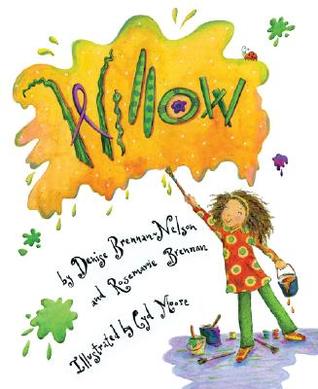 Willow, the protagonist of this book has a personality reminiscent of Eloise and Madeline. Her stubborn determination to be imaginative and artistic even as her art teacher, Miss Hawthorne tries to break the spirit of creativity with rigid rules eventually transforms her teacher. Willow’s open, loving spirit is innocent and generous and the story is an inspiring example of adult-child interaction. The illustrations are energetic, riveting paintings that transport the reader into a parallel universe of creativeWorld. I’ve already gifted this book to one of my daughter’s friends. I bet you’ll find it just as infectious and worthy of sharing.
When one reads Willow, it is easy to believe that you are reading about a child of color, however I bought the second book in the series, Willow and the Snow Day Dance and the character’s parents are both white with no explanation of adoption so I’m thinking that I’m wrong about her being a child of color. In addition, when I read A Fire Engine for Ruthie, I noticed, with the illustrations of Ruthie that it is Cyd Moore’s style to draw her girl protagonists with wavy krinkly hair (although that doesn’t negate Willow’s brown skin). I emailed the illustrator, Cyd Moore and the publisher, Sleeping Bear Press asking if Willow is a child of color and have not yet received an answer. Despite that, I’m including Willow on this site because sometimes children just need to see their likeness on the page in a book with a real story and a child with a dynamic personality, and there are plenty of children of color who can look at Willow and see themselves in her light brown skin and wavy hair that grows out instead of down.
Recommendation: Highly Recommended; Ages 5+
Reviewer: Omilaju Miranda
In Our Mothers’ House by Patricia Polacco
 This is one of the best first person narrative children’s books I’ve ever read. The voice is so authentic I thought it was a children’s nonfiction story until I read the back bookflap. An African descendant woman tells the story of her life with her two mothers, Asian brother and carrot-top sister from their at-birth adoptions until their parents pass away, leaving the family home to the protagonist’s brother. Polacco’s narrative style is one of such candor and fluidity that as the protagonist shares with us the milestones of her life from becoming a big sister to seeing her mothers in dresses for the first time to finding emotional comfort in the home after her parents pass away , the reader is increasingly emotionally invested in their ever expanding world of friends, family and tradition. Polacco also includes the conflict of an anti-gay neighbor in the book, who turns the dial up on that confrontational anti-gay anger pretty high without actually saying “lesbian, gay, or homosexual.” The mothers handle the confrontation in a protective and reassuring manner that gives parents reading this book with children the freedom to explain as little or as much about sexual orientation as parents wish, including saying nothing about sexual orientation and just explaining that sometimes people don’t like others who are different. Illustrated with engaging animation and expressiveness, readers will see and feel a full spate of emotions as we do in real life. While the mothers demonstrate friendly touch affection towards each other and familial touch affection toward the children, for some, it will be important to see that the three children enter heterosexual marriages, framed in family portraits near the end of the book. The choice to show the oldest daughter and the son married to people within their “own” racial groups, demonstrates to me a silent acknowledgement of efforts made by the Italian and English-Irish mothers to encourage, support and preserve their children’s unique cultural identities. Complete with three children who grow up to become successful professionals with happy families of their own, In Our Mothers’ House is the multi-dimensional All American LGBT-parent family story.
Recommendation: Highly Recommended; ages 6+
Reviewer: Omilaju Miranda

A Tale of Two Mommies by Vanita Oelschlager
 All dialogue, this rhyming book is a conversation between the adopted son of two others and his friends while the protagonist and his friends play on the beach. As they run, play ball, swim, and have other beach fun, the questions and answers volley in sets of two. “Which mom is there when you want to go fishing? Which mom helps out when Kitty goes missing?” “Mommy helps when I want to go fishing, Both mommies help when Kitty goes missing.” The narrative continues in such a trajectory until it includes answers in which the protagonist says he is the one doing certain things. This is a full portrait of the emotional and activity life of a family from the perspective of a child who is increasingly taking on responsibilities. The child happens to be the African-Descendant child of two white moms but that is not discussed. This is a story with which every child who has taken note of how their parents nurture and mentor them, can identify.
Recommendation: Recommended; ages Ages 2-8
Reviewer: Omilaju Miranda

Mixed Me by Tiffany Catledge
 My immediate reaction to this book is “this is so cute”. I like the voice of the young girl in the book and the choice to put her in a very diverse world—although “a tale of a girl who is both black and white,” her world is filled with the full spectrum of human diversity. I find it to be very didactic. This isn’t so much a story as it is an illustrated speech to the reader. The protagonist discusses all the major issues mixed-race children encounter from people outside of their family and the watercolor illustrations are incredibly appealing. The straightforwardness of this book makes it very valuable as a teaching tool so I think teachers and school librarians should include it in their collection or, parents should buy it and donate it to the school so it can be a part of the classroom and, hopefully diversity lesson plans.
Recommendation: Recommended for Educational Purposes; Ages 5-7

The Hello, Goodbye Window by Norton Juster
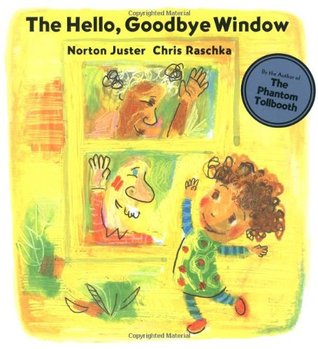 This is my new favorite book. Centered around the magical front window of her grandparents’ home, this is the story of a pre-school child’s normal visit to her grandparent’s house. Norton Juster uses this first person narrative to give us such a dynamic representation of the protagonist’s emotional and practical experience visiting her grandparents. The interaction between the grandparents—Nanna and Poppy—is fun and disciplined, subtly touching on some of the safety and restriction issues that pre-schoolers are learning at this age. Her impressive imagination is on display when she speaks of ANYBODY being able to go by the Hello, Goodbye window including Tyrannosaurus Rex (he’s extinct so doesn’t come often, you know.) The grandparents are an interracial couple as are the protagonist’s parents who come pick her up at the end of the story. These are happy, culturally diverse people—Nanna (who is of African-Descent) is from England so the Queen comes by for tea; Poppy plays the Harmonica and the protagonist hopes the Poppy she marries can play the harmonica, too—who love the protagonist in a comprehensive expression of that love. I literally had a warm feeling in my chest as I was reading this book and constantly smiled at the protagonist’s happy movement through her day. With three generations of family represented through a child’s eyes, you and your kid are going to love this book.
Recommendation: Highly Recommended; Ages 3+
Reviewer: Omilaju Miranda
 Diverse Kids Books--Reviews