
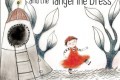
Morris Micklewhite and the Tangerine Dress by Christine Baldacchino
 As I finished reading this book I was saying out loud to myself: “I like it. I. Like. That.”
This book drew me in to review it. I could not have delayed it if I wanted to. Morris Micklewhite likes his home, pancakes, and lots of things at school, including a tangerine colored dress from the dress up box. He loves the way the tangerine dress makes him think of “the sun, tigers and his mother’s hair.” He puts the tangerine dress on over his pants and black and white striped shirt, and tries different, dressy, heeled shoes from the dress up box on. Morris likes the sound the dress makes when he walks, has a favorite pair of dress shoes that make the sound “click,click, click,” enjoys his nails painted by his mom, but does not like the way boys and girls bully him at school because of the dress.
The text deals accurately with the realistic, antagonistic responses that both girls and boys have to non-conforming gender performance amongst their peers, with girls trying to pull the dress off of Morris’ body, boys excluding him from their games, and both genders verbally taunting him. Isabelle Malenfant’s pen and ink illustrations depthfully present each character’s many layered emotions and Morris’ purposeful, powerful, and vulnerable actions throughout the narrative.
Morris retreats to his home for a few days, taking refuge in his mom’s nurturing, books, puzzles, his cat and his dream. When he returns to school, he carries a painting of his dream with him, and when the boys refuse to allow him entry to their cardboard space ship, he builds one of his own. When the girls try to take the dress from him again, Morris stands up for his right to wear the tangerine dress until he is finished with it. Then, the boys who like the space ship Morris has built better than the one they built, allow Morris to lead him with his imagination and get to know him as an inventive, exploring fellow kid whose fun quotient is more important than the idea that he could change them into girls.
The winning moment of this book after we go through Morris’ journey of social challenges and self acceptance is his self-confidence, expressed in the affirmative exchange he has with a little girl in his class named Becky.
When Becky snips, “Boys don’t wear dresses.”
Morris responds, “This boy does.”
And there he goes. Morris you have the right to be you.
Whether the child you read to, or who reads this, is gender conforming or non-conforming in their play, every child will be able to understand the emotional and psycho-physio pain they have in response to being bullied and not accepted, feeling the need to step away from all peers for a little while to take a rest from bullying, and the importance of their imagination to serve as a self-soothing coping mechanism; the power of their imagination to bring them joy and instill in them a sense of pride in themselves where they may have suffered from the jabs of other children. While the standard formula often works well, one of the unique things about this book as compared to others about bullying or intolerance from children is that there are no proactive adults involved in this children’s dispute. The protagonist and his peers work out their relationships on their own– a plot choice that models independence and self-reliance for the young reader. Without Morris or the narrator saying it, the story conveys the universal message of “I can do.” to readers. (buy)
Recommendation: Highly recommended 3+
Reviewer: Omilaju Miranda
Marisol McDonald and the Clash Bash/ Marisol McDonald y la fiesta sin igual by/por Monica Brown
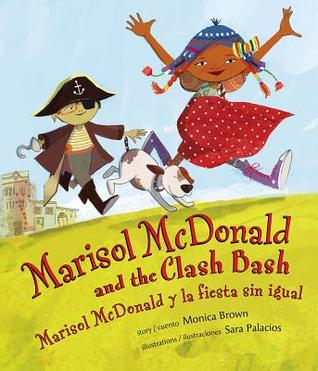 Monica Brown once again delivers a captivating protagonist in the character of Marisol McDonald whose bilinguality, red-headed, brown-skinned physical traits, and mixed Peruvian-Scottish-U.S.American ethnic heritage are significant influences on her daily life. Marisol McDonald became one of my favorite children’s literature characters in the first book in this series, Marisol McDonald Doesn’t Match. This time around, Marisol is days away from her eighth birthday. While she doesn’t want to choose clothes or a party theme that match, she does want to see her abuelita (grandmother) for her birthday. However, Marisol must deal with the disappointing reality that, despite the fact that she has been doing chores and saving money for two years to pay for her abuelita to visit, a visa for her grandmother to visit the U.S. takes too much time for abuelita to arrive before Marisol’s birthday. With the strategic use of hand made, individualized party invitations to her diverse, multicultural group of friends, Marisol is able to get her mismatched costume birthday party and her abuelita finds a special, and realistic way to make an appearance. The story is told in a rich, first person point of view, which includes a sprinkling of Spanish in the English version and a sprinkling of English in the Spanish version so the reader always feels as if they are living in Marisol’s authentic bilingual world. Palacios’ painted illustrations add to the overall cheer of enjoying this book. And the dual language, English/Spanish telling of the story allow the reader to read the story in both languages in one sitting or read it in English one day and Spanish the next day.
My four-year-old who is rather good at decoding and following a good story didn’t follow all the detailed nuances that go along with Marisol choosing not to match and wasn’t as excited about this story as I was so I put target audience at just slightly older and a better fit for the child who can already read. The quality of the story should make it a favorite for children beyond the age of ten even though they will have already moved on to higher reading levels. For the 5-8 year old reader, new vocabulary is emphasized that will make them excitedly run to the dictionary so they can understand every single word and emotion of this spunky, energetic protagonist. I want to see so much more of Marisol McDonald. Once again, think Madeleine, think Eloise, think Olivia the Pig, think Orphan Annie all updated and in a Peruvian-Scottish U.S.American girl. l I love this character; you and your kids will as well. (buy
Recommendations: Highly Recommended Ages 5-8+
Reviewer: Omilaju Miranda

Mommy, Why’s Your Skin So Brown by Maria Leonard Olsen
 The brown skinned, multiracial mixed heritage mother of two children who are lighter than her discusses with her children why she is darker than both of them and much darker than the son who has fair skin, silky blond hair, and blue eyes. The book reads as if the author simply transcribed a conversation that she had with her children. Her anger or annoyance with people who were asking the author if she was the nanny (according to interviews she has given) comes through evocatively in the tone of the narrative as well as on the book’s back cover blurb, which both address the necessity to admonish people to not allow their “curiosity to overwhelm their manners”.
That is a salient point that many parents of interracial families would like to communicate to those who rudely ask questions like “Are you the nanny?” “Is she adopted?” “Is that child yours?”, which confuse and sometimes sadden our children. However, in a children’s book, the tone of the mother’s frustration doesn’t communicate as a part of the children’s characterization and reads as the words of an angry author. It just doesn’t feel like it is from the children, and there’s nothing in the narrative to balance it off.
Points of the narrative that could have been the basis for beautiful illustrations of the entire family are missed. This conversation between the mother and her children is boring as a book read to a child and there are points that actually get confusing where the mother narrator is discussing where everybody got their different features (i.e. the mother speaks of getting her own dark skin from her grandmother, herself being a color in between both her parents, and her son getting blue eyes from his father and the mother’s grandfather) yet there are no images of the relatives to accompany this monologue.
This lack of illustration accompanied by no mention of the mother’s actual ethnicity (research into the author reveals she is biracial Filipina and this story is from her personal life) seems like a strong commitment to being vague. I’m sure the author doesn’t mention the ethnic heritages of her family so that the book could be used universally by the many parents of color of all ethnicities and races who face this scenario but because this book’s only story line is this family, the absence of a discussion of the family’s ethnicity and actual heritage leaves a palpable void. With no characterization for any of the characters in the book and a narration primarily from the mother’s perspective, sadly there is no story here. This is such a loss in part because this is the only picture book I’ve read that focuses primarily on the biracial child with almost exclusively Caucasian features. The other books which even present these children, present them as part of a duo led by brown biracial children or as part of an ensemble cast.
While I do not see this as an enjoyable read for children of any age as a standalone book, this book could easily serve as an interesting guide for adults on how to discuss this matter with their children and the points that can be covered regarding family features. If used in that matter, I would definitely suggest incorporating photos of the referenced family members into the conversation. (buy)
Recommendation: If your family is similar to the one in this book then, couple this book with your own family photos and exploration of your family tree or, for people with all types of family constructs and teachers, couple this book with either That’s My Mum by Henriette Barkow or My Mom is a Foreigner but Not to Me by Julianne Moore and this book can lead off the discussion of the serious aspects of a family dealing with people’s reactions to a mother (or father) looking racially different from her children.
Recommendations: For Adults to lead discussions on interracial families and phenotype differences.
Reviewer: Omilaju Miranda
Every Little Thing by Cedella and Bob Marley with by Vanessa Brantley-Newton
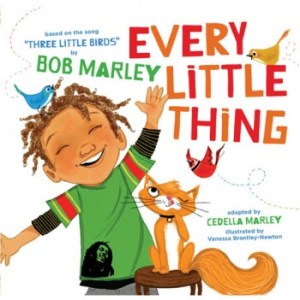 Every Little Thing, Cedella Marley’s adaptation of Bob Marley’s song Every Little Thing could be called the companion book to Marley’s adaptation of her father’s One Love song. This time, the protagonist is a little boy from a loving family who spreads the joy and comfort that his parents give him through their affection and forgiveness, with other kids. Once again, Brantley-Newton’s illustrations powerfully tell a story with Marley’s words serving as the lyrical underscore for what is happening. I couldn’t help singing this book to my daughter and she easily and happily sang along in between asking questions about what was going on in the story. The narrative starts when the protagonist wakes up in the morning, follows him through a day of playing in the rain, and sun, enjoying time with his pets and three little birds, as well as his friends. He befriends a shy and isolated friend, makes a mess of his kitchen trying to bake a cake, is forgiven by his parents, sulks about bedtime, before his parents hug him and tuck him in, then he awakens in the next morning happy again. While the cast of characters is much smaller than that in One Love, a fair representation of black and white characters with different phenotypes is present. I was particularly happy to see an Asian child included as the subject of the protagonist’s friendship in the illustrations of this book as Asians were absent from the book One Love. Without question, this book is a joy to read, and once again the illustrations are perfect for the pre-literate child to practice “reading” comprehension skills in decoding the story told by the illustrations.
Recommendation: Highly Recommended ages 0+
Reviewer: Omilaju Miranda
Lulu’s Busy Day
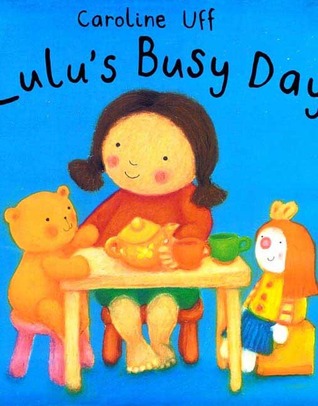 Lulu’s Busy Day is the sequel to Hello, Lulu and this time around we learn about the daily activities of our main character (while her heritage is again sidestepped). Drawing, visiting the park with a friend, and building castles is all in a day’s work for Lulu. While the first Lulu book visually suggests that she’s biracial by introducing us to her parents, this book also prefers to visually cue us in on her differences: her brown, puffy hair, dark eyes, and tan complexion. So while she looks a little different compared to many popular storybook characters, she still does all the same things as everyone else. Thus, this would be a good book to share with your child to introduce them to a diverse character—just make sure you point it out to your young reader.
Recommendation: Recommended to introduce young readers to diverse-looking characters; Ages 2-5
Reviewer: Kaitlyn Wells

Hello, Lulu by Caroline Uff
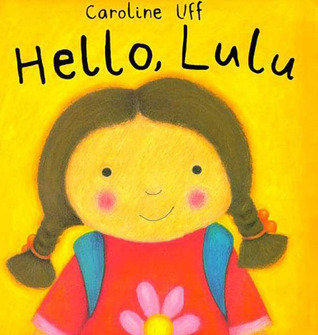 Hello, Lulu is a great book for beginner readers, but not necessarily the ideal book if you’re teaching your little one about diversity. The book introduces the reader to a little girl named Lulu and the important people and things in her life. The reader learns about Lulu and all of the members of her family. The board book itself features brightly colored backgrounds to help Lulu’s family members stand out. So while the illustrations visually cue us in on the family’s interracial composition, it’s never verbally explained. Thus, to bypass this subliminal message, you may want to point out the fact that Lulu’s parents are different races from the beginning. One other note: From learning about what Lulu’s favorite snacks are to how many pets Lulu has, your child is sure to notice a correlation or two in their own life (racial composition aside).
Recommendation: Recommended to introduce young readers to diverse-looking characters; Ages 2-5 (buy)
Book Reviewers: Kaitlyn Wells

Something Special For Me by Vera B. Williams
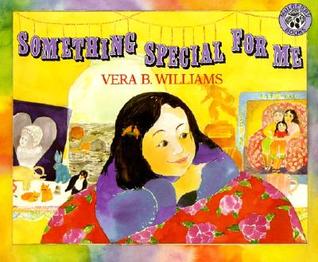 Vera. B Williams’, Something Special for Me, follows Rosa, once again as she narrates a series of situations in her life. Even as a child, I grinned when stories contained nods to a protagonist’s earlier titles and several details including the reappearance of the chair and coin jar from A Chair for My Mother lent that special touch here. The accordion also brings the idea of family tradition to in this book.
After the coin jar from A Chair for My Mother, is filled once again, Rosa’s mother and Grandmother decide to use it for Rosa’s birthday present. Rosa comes close to buying herself roller skates, clothes, and even a red tent, but backs out of each buy (to be honest, I was hoping for the skates).
After she hears a man playing an accordion and finds out that her Grandmother also played the same instrument, Rosa chooses to buy an accordion. I really enjoyed this ending because Rosa found a way to make herself happy, and bring a small joy to her mother and Grandmother. It was enjoyable to see Rosa doing something for herself this time. This is different from the approach to family loyalty in A Chair for My Mother and Music, Music, for Everyone in which Rosa is solely focused on her mother and grandmother.
I found Williams’ artwork, although somewhat simple, engaging. I was so intrigued that with each page, I tried to see every item in the artwork. Young girls may enjoy Something Special for Me moreso than other readers but Williams writes a story in which gender is not significant to the plot.
Recommendation: Recommended. Ages 5+
Reviewer: Warren Stokes

Josephine by Patricia Hruby Powell and Christian Robinson
 A free verse prose poem tells the life story of the first black American international musical superstar Josephine Baker, born out of wedlock and raised in part by a single mother. Collage drawings give the book a rich tactile feel that almost transcends the flat page. The language, which tells the story of Baker’s creativity and success amidst the U.S.’s violent racism is continuously evocative. While the images are fun to look at for all ages, only children ready to learn about racism, race riots, and shadism should read the book, as those harsh realities made a huge impact on Josephine Baker’s life and career, and are represented in heartrending language and images in the book. This is a beautifully told story that will tempt both the child who loves, and the child who hates reading and poetry, to become a poet. Verse after verse, the reader will learn of Josephine’s courage, and her fierce determination to be center stage as the dancing star she believed she could become. Those afraid to move on to middle school, go off to boarding school, or attend a training camp for their sport or art will see in Josephine, a girl so committed to the fulfillment of dancing that she left home at thirteen-years-old to tour the country, and left her husband for Broadway when she was only fifteen-years-old. Those who never consider the power of humor will learn how Baker attracted the spotlight with her comedic facial expressions as she danced. Her dynamism will inspire the reader learning of her many landmark performances, as well as her choice to become a pilot and fight as a spy against the Nazis during WWII. With dramatic punctuations in the poetic language, the author tells of Baker’s economic fall, and how bankruptcy proved to be a painful lesson in excess for the generous humanitarian. But Powell makes sure the reader knows that Baker was a socially conscious performer. At one point the richest Negro woman in the world, Baker was a civil rights fighter who convinced the army and many venues to allow integrated audiences to attend her performances, and even convinced owners of segregated corporations to hire blacks. The language and illustrations will make you feel Josephine’s life— her ups and downs, her ultimate triumph in achieving every dream she had, including dying “breathless, spent, after a dance.” (buy)
Recommendation: Highly Recommended; Ages 10+

You Be Me and I’ll Be You by Pili Mandelbaum
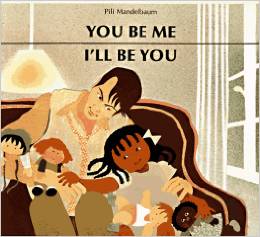 A well intentioned father tries to help his brown-skinned biracial daughter feel comfortable with her skin color by plaiting his straight hair, donning black face and having her don white face. I was almost too insulted to continue reading but out of duty, I finished the book. The narrative attempts to redeem itself by showing people laying out on the beach tanning, using rollers to make their hair curly, and pointing out that every one wants features they can’t have. I don’t know if this did well in Belgium where it was originally published but as a U.S.American, I would never read this to my child.
Recommendation: Not Recommended.
Reviewer: Omilaju Miranda

One Love by Cedella Marley, Bob Marley and Vanessa Brantley-Newton
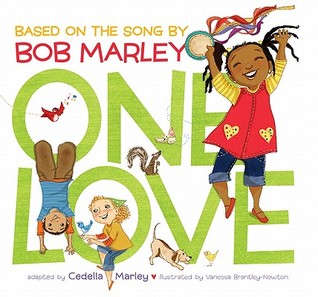 Look closely at the illustrations as you read this book and each time you will discover something new. The words are the lyrics of Bob Marley’s song “One Love”, the illustrations tell the story of community togetherness. A little girl waves goodbye to her loving mom and dad and walks into the friendly world outside her door, which is filled with nature, happy neighbors and close friends who play, plant, and recycle together. The illustrations are vivid, exciting and contagiously spread a smile across your face. Although the only obvious racial phenotypes are Caucasian, African Diaspora and black/white mixed, the full range of phenotypes within those ethnicities is represented. Children of all ages will enjoy this book and those who remember the song will love sharing the song with a new generation as they follow the illustrations telling the story of community responsibility and cooperation to repair, rebuild, and landscape a neighborhood park in disrepair. Simple, loving, lyrical of course, and with such strong illustration dependent story telling that this is a great book for the pre-literate child to practice decoding and multiple levels of “reading” comprehension, which is what I did with my pre-reading daughter. This is a book everyone should have and all who have children should read and discuss with their kids. (buy)
Recommendation: Highly recommended Ages 2+
 Diverse Kids Books--Reviews