

Best, Best Colors/ Los Mejores Colores by Eric Hoffman
 I like everything about this book. The watercolor illustrations are dreamy and perfect for a book focused on a boy’s struggle with loving all the colors of the rainbow. Written simultaneously in Spanish and English, this is the story of the protagonist Nate having trouble deciding which color is his best color so he keeps on changing his mind based on liking a new object. Whatever color the sneakers or cape or paints are is his favorite color. He wants to integrate whatever color is his favorite into his world and he chooses his “best mom” or best friend according to whether or not they say “yes”, he can have the color in his life the way that he wants. When they say “no”, as mothers must, he takes away best mother status—which is such a candid representation of the mercurial nature of children. Without making reference to it, we see Nate with his moms and his sister who are all different races/ ethnicities (Nate and one of his moms are African Diaspora people while his other mom is Caucasian and his sister is East Asian) enjoying life on Nate’s journey of figuring out what and who he likes best. In the end, his nightmare of colors fighting opens his mind to choosing an object in which all the colors get along: the Pride Flag. This is one of the few books representing LGBT parents with an African Diaspora mother or child so it is refreshing that is has a well-written story line independent of its representation of diversity.
Recommendation: Highly Recommended
Book Review by Omilaju Miranda

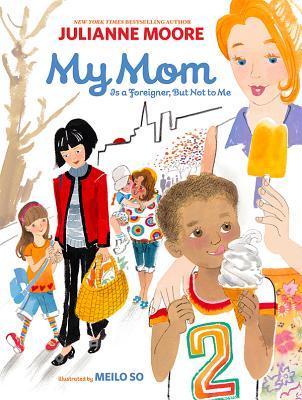
My Mom is a Foreigner but Not to Me by Julianne Moore
 I love this book so very much
I can read it ten good times
She represents a child’s experience
With such cool, catchy rhymes
This book by Julianne Moore, primarily written in ABCB rhyming quatrain stanzas, is a first person narrative from the perspective of a dozen different children, which talks about the varied experiences of a child living in the U.S. with a mother from another country. The illustrator, Meilo So has chosen a “framed” illustration style which, other than the fact that it leaves a lot of white space on the page is successful at providing images for many different aspects of the “story” simultaneously.
Not only do I like the fact that Moore’s rhyme is perfect ninety per cent of the time, the text shows the dynamic conflicts faced by children who love their mothers but experience, with a little shame, all of the ways in which their mother is different from other mothers and people they encounter daily, including their different food and culturally different greeting and doting customs. The children also communicate their discomfort with their mothers’ use of a different language in communicating with them and their mothers’ slow mastery of English as their second language.
Most of the children from whose voice the book is written appear to be between the ages of 7-11. While there are several pages in the book illustrating the mothers caring for a second child in the infant/toddler age range, there is only one page in the book that shows a mother and father together (in a photo on a dresser) so children living in single-mother led households can easily find a reflection of their family construct in this book.
Most of the mother-child relationships in the book are clearly representative of an interracial family (even though we don’t see fathers) with children who look racially different from their mothers. Moore and Meilo So cover the full gamut of children who look racially different from their mothers whether the mothers are East Asian, Subsaharan African, or Dutch with children whose features present as the entire world spectrum of all racial/ethnic features. Meilo So does not just throw kids on the page who are holding hands with mothers—no, her vivid, emotionally realistic, water color illustrations are done with such attention to detail that on one page there is a brown-skinned, gele scarf wearing mother with her pale-skinned, red-haired daughter who the reader can see look exactly alike–like twins except their skin color, height, and weight are different. The “twin” mother and daughter are walking up the stairs as a boy behind them keeps staring at them and a mother holding a child that is like her in every obvious way walks towards them staring at them with a surprised, questioning look on her face. The text that goes along with this illustration speaks of the emotional weight a child faces when her features are just like her mom’s but because of different racial markers people don’t always see their likeness:
“Some people say we look alike
Others wonder: What’s HER name?
I get so upset when they say,
“Why don’t you look the same?””
Finally, this book ends with a celebration of all the universal ways in which a mother and child bond,
“She gives me lots of kisses,
she tucks me in at night,
she laughs at ALL my jokes,
SHE HOLDS ME VERY TIGHT”
With this well-written, fancifully illustrated picture book, Julianne Moore and Meilo So have hit a home run for all readers and definitely for intercultural and multi-lingual and interracial families that also keeps children belonging to single parent households from feeling like outsiders.
Recommendation: Highly Recommended; Ages–3-10
Reviewer: Omilaju Miranda

Mixed Me by Tiffany Catledge
 My immediate reaction to this book is “this is so cute”. I like the voice of the young girl in the book and the choice to put her in a very diverse world—although “a tale of a girl who is both black and white,” her world is filled with the full spectrum of human diversity. I find it to be very didactic. This isn’t so much a story as it is an illustrated speech to the reader. The protagonist discusses all the major issues mixed-race children encounter from people outside of their family and the watercolor illustrations are incredibly appealing. The straightforwardness of this book makes it very valuable as a teaching tool so I think teachers and school librarians should include it in their collection or, parents should buy it and donate it to the school so it can be a part of the classroom and, hopefully diversity lesson plans.
Recommendation: Recommended for Educational Purposes; Ages 5-7

More More More Said the Baby—Three Love Stories by Vera B. Williams
 I didn’t really enjoy this book but I seem to be the only one. It was a Caldecott Honor Book in 1990 and my 3-year-old daughter got in to touching her own belly button during the part where “Little Guy’s” father is kissing his belly button. I may have found this book more engaging if I’d discovered it for my child when she was an infant or early toddler. This is one of Vera B. Williams’ books that exists for the illustrations and not the written narrative. There are three short stories in this book—stories that illustrate three different children receiving affection from their caretakers. The copyright page explains that the book is based on the gouache paintings and as I read it, the narrative was so thin, in my opinion, that I felt the words were just put on the page to justify putting a multicultural children’s book on the shelf but that was 23 years ago and one of the first, if not only Caldecott honor books with interracial families.
So what exists that is multiculturally relevant? There is a lone father caretaker of a child, there is a Caucasian grandmother caretaker of a child of multiracial African descent, and there is a brown-skinned mother of a light-skinned Asian child. The challenge with the Gouache paintings is a lack of defined detail. My daughter thought that “Little Guy” was a girl who didn’t like her father and, while we suspected that the grandmother was Caucasian, my grandmother upon reading it wasn’t sure—the way the features are drawn, she could just as easily have been a light-skinned woman of color. Similarly, I do not know whether the mother with daughter is supposed to be a brown-skinned Asian sharing her daughter’s ethnicity or a woman of a different ethnicity or race. In an interview I can’t find right now, Williams says that she wrote the book to fill the void of in the children’s books market with interracial families so having read that interview, I’m certain the grandmother is Caucasian. You may find the last painting uncomfortable as a child is splayed in a way that is a little exposing—my daughter asked if the girl had on shorts under her dress. What is clear is that readers can definitely see that families are composed of a rainbow of people. Since this is a book about relationships between familial adults and children, without couples or references to two parents, this is a book that can definitely reflect and validate single parent and alternative guardian families.
Recommendation: Valuable to have in your book collection; Ages 0-4
Reviewer: Omilaju Miranda

PBS Kids’ “Superwhy!”
 If you have not yet discovered the PBSKids show “SuperWhy,” discover it. The main characters—Whyatt/SuperWhy, PrincessPea/ Princess Presto, Red/Wonder Red, Alpha Pig, and Webster are children and pet superheroes living in storybook village whose special powers are related to literacy i.e spelling, phonics, writing and reading. In each episode they help solve a child’s problems by flying into a classic fairy tale in which the child’s problem parallels that of the fairytale protagonist. Then, the SuperReaders save the day by changing the story so that the child in trouble and fairytale protagonist triumph over their issue. This show helps the toddler and preschooler engage in a fun adventure that builds their valuation of reading and helps the early reader learn reading concepts. They cover a full range of reading comprehension and word construction concepts. This is definitely ELA enrichment in the form of entertainment.
The lead character, Whyatt, as described by the SuperWhy wikis and obvious when you watch the show, is definitively olive skinned as is his family. While their ethnicity is not discussed, he has an appearance that many in the mixed and multiracial communities would see as a reflection of themselves. Princess Pea, a green-eyed, brown-skinned girl with waste length wavy hair is actually mixed. In the second episode of the first season, the team flies into the story of Princess Pea’s mother who is the original Princess of “The Princess and the Pea” where we meet her mother who is of African Descent and father who is Caucasian. We rarely see the families of the Super Readers but every episode is going to be a fun, learning episode.
Recommendation: Highly Recommended
Reviewer: Omilaju Miranda

The Hello, Goodbye Window by Norton Juster
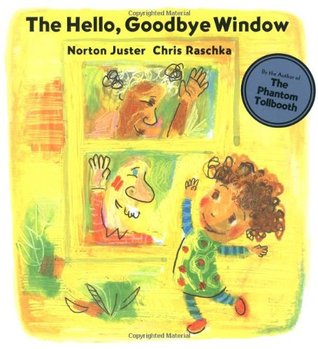 This is my new favorite book. Centered around the magical front window of her grandparents’ home, this is the story of a pre-school child’s normal visit to her grandparent’s house. Norton Juster uses this first person narrative to give us such a dynamic representation of the protagonist’s emotional and practical experience visiting her grandparents. The interaction between the grandparents—Nanna and Poppy—is fun and disciplined, subtly touching on some of the safety and restriction issues that pre-schoolers are learning at this age. Her impressive imagination is on display when she speaks of ANYBODY being able to go by the Hello, Goodbye window including Tyrannosaurus Rex (he’s extinct so doesn’t come often, you know.) The grandparents are an interracial couple as are the protagonist’s parents who come pick her up at the end of the story. These are happy, culturally diverse people—Nanna (who is of African-Descent) is from England so the Queen comes by for tea; Poppy plays the Harmonica and the protagonist hopes the Poppy she marries can play the harmonica, too—who love the protagonist in a comprehensive expression of that love. I literally had a warm feeling in my chest as I was reading this book and constantly smiled at the protagonist’s happy movement through her day. With three generations of family represented through a child’s eyes, you and your kid are going to love this book.
Recommendation: Highly Recommended; Ages 3+
Reviewer: Omilaju Miranda
Hope by Isabell Monk
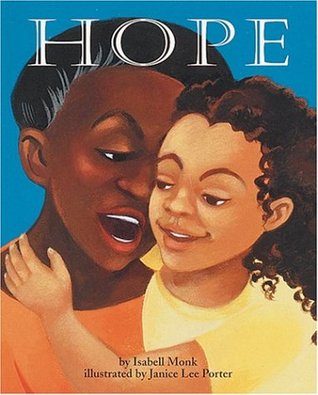 Hope is on her summer visit to spend time with her aunt Poogee. They are having a great time until they run in to an old friend of her aunt’s who has been away for awhile. The woman asks “Is the child mixed?” as if Hope is a weird object instead of a person, which makes Hope feel sad. Aunt Poogee uplifts Hopes spirits by telling her about her ancestry on both sides of her family and that her parents came together in love. This is a straightforward narrative that addresses implied prejudice and recognizes a child’s emotional response to disapproval is felt even when not verbally expressed. Rich illustrations accentuate the emotional impact of the story.
Recommendation: Highly Recommended; Ages 6+
Book Review by Omilaju Miranda

Molly Bannaky by Alice McGill
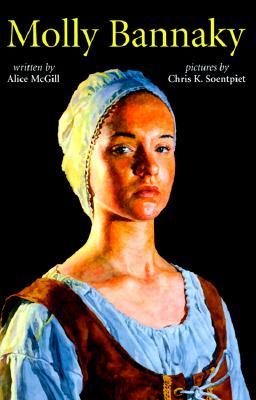 With an awe-inspiring light touch that manages to impart the oppressive colonial history of indentured servants and African slaves without sugar coating or overwhelming the young reader with the harsh realities of this period of history, Alice McGill writes the love and family story of former indentured servant, Molly Walsh and her formerly enslaved husband Bannaky—the grandparents of Benjamin Banneker. Chris Soentpiet’s water color paintings provide an evocative illustration for a story whose complexity holds the reader’s emotional commitment from the first to last page. You feel the griot that is author Alice McGill as you read Molly Bannaky. Every classroom should have a copy of this mini-biography of one of history’s women of strength and every household with or without children should have a copy of this book on its shelves. Not a bedtime story but a story to be read and discussed.
Recommendation: Highly Recommended; Ages 6-10
Reviewer: Omilaju Miranda

Mira in the Present Tense (originally published in the U.K as Artichoke Hearts) by Sita Bhramachari
 Mira in the Present Tense is definitely a three-hankie book. This storyline tows the reader on an emotional roller coaster, gently rocking us back and forth through sadness to acceptance, up to excitement and down to understanding, and over and under through past and present. I found myself tired, but at ease, with the characters slowly strolling through my mind.
We meet Mira, the Indian-Jewish protagonist, days before her 12th birthday and just before she joins a writing class and begins her May Day journal. Mira in the Present Tense is organized by dates instead of chapters, just as a journal would be. For the next month, we jump into Mira’s life as she reaches the highs and lows of the normal coming of age milestones- starting her period, her first crush and first heterosexual kiss, finding her own voice, and standing up to her bullies. At the same time, we join Mira as she and her family live with the impending death of her dad’s mum, Nana Josie. With Nana Josie gracefully leading the way, Mira learns that some heartbreaks are necessary if you truly love the person.
The strength of this book is in its characters, with Nana Josie stealing the spotlight. In her own words, “It is bloody hard work dying well,” but Nana Josie indeed does die well 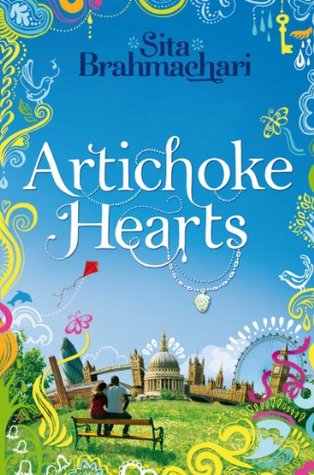 with grace and kindness for all who will miss her. The author, Sita Brahmachari, places layer upon layer until each individual is shaped in our minds. Mira at school is almost painfully shy and introspective, relying only on her best girlfriend and later on a boy in her writing class. But with Nana Josie, Mira is uninhibited. Nana Josie lends Mira her creative strength and her unbound love. Pat Print is another character of note. She appears to Mira in the most honest ways at the most unexpected time, almost as if she is Mira’s guardian angel.
Mira is of Jewish and Indian descent, but beyond her name there is not much mention or focus on this fact in the story. I found this quite normalizing as our children of mixed heritage will no doubt identify with Mira for her racial make-up but everyone can identify with Mira for the struggle she is facing in the death of her grandmother. There are two other characters I would like to point out to potential readers. Mira’s crush, Jide, was a Rwandan refugee adopted by refugee camp workers. There are some small details about the atrocities in Rwanda and if children are unaware it might bring up questions. Jide talks about the physical differences between himself and his adopted parents. He also mentions how frustrating and mad it can make him when strangers make intrusive and uneducated comments. Mira’s Aunt Abi has a female partner, who we are introduced to early on. She does not play a main role and honestly, her brief introduction is quite off putting. When Mira writes, “Nana points to Abi, Aunty Mel—who is actually Abi’s girlfriend, but we call her aunty anyway,” I got the feeling that Abi having a female partner was accepted but not advertised or completely ok.
I recommended this book for ages 10-13.
Reviewer: Amanda Setty

Becoming Naomi Leon by Pam Munoz Ryan
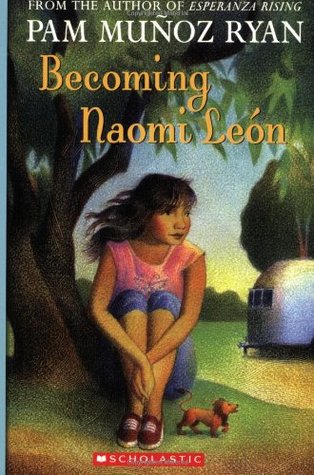 Naomi Soledad Leon Outlaw is a ten year old girl who lives with her great-grandmother and disabled brother in Avocado Acres Trailer Rancho in Lemon Tree, California. She hasn’t seen her mother in seven years, and her father is in Mexico. Naomi is an avid reader, list maker and soap carver who is devoted to her family and loves works. Her world transforms one afternoon when her glamorous looking mother, who has changed her name from Terri Lynn to Skyla, shows up unannounced with armfuls of gifts. Although Naomi is thrilled to meet her mother, she feels overwhelmed. When it emerges that Skyla is an alcoholic who has been in and out of rehab and that she not interested in Owen, Naomi’s brother, because has a disability, Naomi becomes quickly disillusioned.
The novel follows Naomi’s coming of age story and her development into a young woman. Her unconventional family is made up of her great-grandmother and brother, but also includes her neighbors from Mexico, and her estranged father. In an effort to reconnect with the children’s father – and to thwart Skyla’s attempts to take Naomi from her home – their great-grandmother takes them on an impromptu road trip to Mexico in their airstream trailer, named Baby Beluga. They arrive in the country right before La Noche de los Rabanos, The Night Of The Radishes, a Mexican festival where carvers create elaborate artwork out of radishes. The Leons, they find out, are renowned as carvers, and Naomi experiences a deep cultural immersion in discovering her Mexican roots, wearing a traditional Mexican Village woman’s blouse and huraches, and carving radishes with her friends.
‘Becoming Naomi Leon’ is a poetic, poignant novel with excellent character development and gentle treatment of difficult subject matter. It’s a classic coming of age story that incorporates the positive aspects of cultural mixing, and handles this complex family structure with grace and insight. The discovery of the long lost Mexican father is the highlight of the narrative.
Recommendation: Any advanced reader will enjoy this book, which could also be a good book to read to a child who is ready for chapter books to read aloud.
Book Reviewer: Jill Moffett
 Diverse Kids Books--Reviews