
Diverse Kids Books–Reviews

Home » Articles posted by omilaju (Page 4)

Author Archives: omilaju

Breadcrumbs by Anne Ursu

cover for BreadcrumbsIn Breadcrumbs, Anne Ursu has penned a lively, wistful tale that gets at so much of the poignancy that is being a 10-year-old. This is a moving story that offers a modern-day account of Hans Christian Andersen’s “The Snow Queen.” In Ursu’s version, Hazel, a ten-year-old Indian-American girl with white (adoptive) parents is best friends with Jack, the boy next door until Jack mysteriously changes. The adults around them chalk up this change to typical pre-teen turmoil: it’s not unusual for girl–boy friendships to become awkward. But the reader can feel Hazel’s sadness. It’s hard to grow up, it’s hard to change and watch others change. Hazel is caught between wanting to fit in and wanting to keep her special friendship with Jack the way it is. At its heart, this is a story about how we can hold onto our real selves even as we change along with our friends. (more…)

Reading in Two Languages Just Makes Sense by Rachelle Escamilla

Back when I was teaching the young ones, I tried to read books with more than one language. I liked to read, out loud, in Spanish and the kids loved to hear languages that weren’t the ones they used most often. Those unfamiliar words seemed to travel into their brains and absorb or create little synaptic pathways; and because the word is so new and interesting, the child has to mouth it:           You say sun or sol. They repeat.    You say arbol or tree. They repeat.

When I teach reading to my students at a Community College in California I tell them:

reading-with-kids500You have to be active when reading! You have to read, speak, write and do!

So why not apply that principle to reading to children? Why not apply it to reading in two languages? It just makes sense. And now, even if you don’t know the words, you could just Google the pronunciation. Or you could brush up your Spanish or whatever on Duolingo. So reading a book with more than one language is super good for you, and probably fantastic for your child, who is always listening.

NOTE:

Rachelle doesn’t have children, but was a preschool teacher while she was getting her BA in Lit at San Jose State University and was a preschool substitute teacher while getting her MFA in Poetry from Pitt.

World of Children’s Books Still Very White; Real U.S. Children Increasingly People of Color

Five Thirty Eight Life image of children of color reading white characters

Spike Lee and Toni Morrison are two of my students’ favorite authors. Of course, their inclusion on our syllabus is not without controversy. For instance, Morrison’s beloved “Peeny Butter Fudge,” a collaboration with her son Slade, includes a recipe on the last page, and my students really want to make it. While there are no peanut allergies in my class this year, the recipe is much too sugary.

My students are 4 and 5 years old, and finding excellent books for them featuring people of color, kids with two dads, kids with no dad, or girls who slay dragons is a persistent challenge. Like many educators, I find myself returning to a handful of treasured titles, including “Peeny Butter Fudge” and Lee’s “Please, Baby, Please.”

Annual statistics from the Cooperative Children’s Book Center bear out what I know from visits to my local library. For three decades, the librarians at the center, a modest outfit at the University of Wisconsin, have tracked one dimension of diversity in books for children and young adults: racial diversity. Children’s and young adult literature (“kid lit”) represent a stubbornly white world even as U.S. children are increasingly people of color.

Since the center began tracking data in 1985, it has found underrepresentation of people of color both as authors and characters. Originally, it only tracked African-American authorship and content, finding just 18 new titles by African-American authors that first year.
Read More

The Case for Loving: The Fight for Interracial Marriage by Selina Alko and Sean Qualls

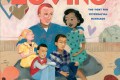
cover The Case for LovingI fell in love with this book the moment I saw it. The cover itself featuring the entire Loving family in a close embrace, seemingly on Dad’s lap as Mom and Dad exchange a gaze as warm as a hug, emanates warmth and makes me feel a sense of strength and belonging. Right now I let my four-year-old interpret the illustrations and make her own story but I have cleared a center space on one of our bookshelves to present this book and look forward to the day when I will read my daughter the words. Written and illustrated by an interracial wife and husband team—Selina Alko and Sean Qualls— who include their own short bio of being an interracial couple at the end of the book, the narrative weaves the sensitive story of the Loving family from the perspectives of Mildred, Richard, and their children with the harsh facts of U.S.America’s racial history. While the narrative portrays some aspects of the love story between Mildred and Richard, as children read the images and/or words of this picture book, they will connect with the Loving children through the cozy illustrations and narrative lines like “Donald, Peggy, and Sidney had two parents who loved them, and who loved each other.” The third person omniscient narrative voice switches from the children’s perspective to the parents’ to a compassionate voice detailing as delicately as possible, the disturbing realities of Reconstruction Era, Jim Crow, and other racist laws of United States’ history. (more…)

The Barking Mouse by Antonio Sacre

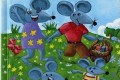
cover The Barking MouseBased on a Cuban folk tale, The Barking Mouse uses a cute story to serve up the importance of learning to speak different languages. In the story, a family of mice on a picnic runs into trouble when brother and sister mouse taunt a cat, as Mama Mouse and Papa Mouse smooch. When the cat chases them, Mamá Mouse saves the day by barking, which scares the cat and makes him run away. The bright, cartoon illustrations make the story attractive to younger readers, but there’s a fair amount of text on each page, which means that it’s a definite read-aloud book. The story is a little bit silly and might get tired kind of quickly, but there’s a lot of really nice, realistic family joking that’s fun to read.

The text itself is interspersed with English and Spanish, and there’s a glossary at the front of the book to show readers words they might be unfamiliar with. There’s also a note from the author, geared towards parents, explaining his own experiences with bilingualism as well as racial and language- based bullying. This note alone makes the book, and really hammers the moral of the story home.

Reviewer: Alejandra Oliva

Recommendation: Mildly Recommend for ages 4-7

 Buy The Barking Mouse


First Rain by Charlotte Herman

cover for First RainFirst Rain by Charlotte Herman and illustrated by Kathryn Mitter is a wonderful tale of personal growth through family love. When Abby and her parents move to Israel they are sad to have to leave Abby’s Grandma behind. As Abby finds out that Israel is an exciting new place, she tells her Grandma all about her new experiences through letters and telephone calls. Abby’s relationship with her Grandma is poignant without being emotionally heavy. Their love carries the reader through the text and Mitter’s bright illustrations.   (more…)

Harlem’s Historic Neighborhood Sugar Hill by Carole Boston Weatherford

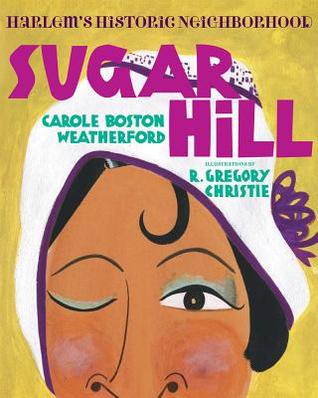
cover for Sugar HillHarlem’s Historic Neighborhood Sugar Hill by Carole Boston Weatherford is an illustrated celebration of famous African-Americans who lived and thrived during the Harlem Renaissance of the 1920’s and 1930’s. The book is written using rhyming text, introducing the people and the culture of the neighborhood. The illustrations are bright and inviting for both young and older readers. The illustrator, R. Gregory Christie weaves style, color, size and placement of the words into the page so the reader is drawn to stop and notice the details of how Sugar Hill might have looked. The last two pages of the book feature short biographies, giving more details about the featured residents. (more…)

Many Ways: How Families Practice Their Beliefs and Religions by Shelley Rotner and Sheila M. Kelly

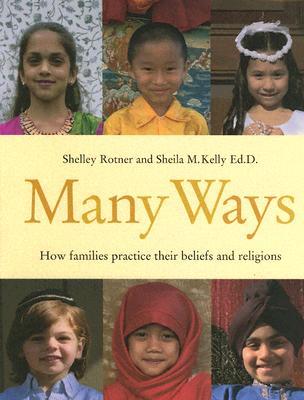
cover for Many Ways--How Families Practice ReligionMany Ways: How Families Practice Their Beliefs and Religions by Shelley Rotner and Sheila M. Kelly, published in 2006, is a book that attempts to raise awareness of spiritual diversity within families and faith traditions. The book views different religious traditions through a universal lens, exploring faiths like Buddhism, Christianity, Islam, Judaism, Hinduism, and Sikhism. Rotner and Kelley accomplish this by beginning the book showing children participating in everyday activities like going to school, working, and playing, then shifting into separate traditions that show how these faith-based practices are connected through the global ideas of stories, music, and symbols.

Instead of using the traditional mode of illustrations to show examples of diverse religious and cultural families, Many Ways depicts these ideas through photography. This can be viewed positively, as it demonstrates to readers that a wide variety of religious practices are being celebrated and enjoyed by real children around the world. Children of many religions can read this book and see their own spiritual practices while learning that other children with religions different than their own share fundamental similarities. (more…)

Skin and Bones by Sherry Shan

cover of Skin and Bones -boy anorexiaSkin and Bones by Sherry Shahan delineates a sobering and startling look into the minds of teenagers with eating disorders. From the beginning we learn that svelte 16-year-old Jack Plumb, who weighs 103 pounds, is obsessed with his weight (in the most stunning ways): He wears only heavy, black sweats to force his body to perspire and rid itself of “liquid fat;” he relishes in the fact that every stomach growl means his body is consuming itself; and he fears the few ounces he’ll gain with every sip of water he takes.

While these things may seem odd to you and me, they make perfect sense to an anorexic like Jack. But Jack knows he needs help because no one actually likes being sick. So he begrudgingly allows his parents to check him into a six-week program in the Eating Disorders Unit (EDU) at a rehab institution. And, of course, he hates it already. There are nurses watching his every move, bathroom doors must remain opened to ensure no one’s purging, and his roommate is…well…not what he expected. (more…)

Hold Tight, Don’t Let Go by Laura Rose Wagner

cover for Hold Tight Don't Let GoI began reading Hold Tight, Don’t Let Go with my adoptive mother and adult adoptee eyes. As I read, I thought often of my pre-teen daughter who is adopted from Haiti. Although the author, Laura Wagner, does not write into the adoption conversation per se, she offers a story of Haiti and its people developed with respect and beauty.

Many people outside Haiti can only see the country through the perspective of “other”, but Wagner does the excellent work of telling the country’s story of difficulties, danger, and poverty alongside stories of humanity, hope, and strength.

(more…)