
Home » Posts tagged 'biracial' (Page 4)
Tag Archives: biracial
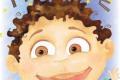
Mixed Like Me by Gina Galliday-Cabell
 The number of times the kid in this book says he doesn’t want to be mixed and the emotion with which the author writes it hit me so hard I was hurt, angry and turned off. I thought, “I can tell why she had to self-publish!” which isn’t really fair because there are some well written books that are self published. I imagine she wrote this book by putting her child’s actual feelings and a real conversation with her kid on the page but for me it kicks so hard, I wouldn’t read it to my 3-year-old; maybe a five and older kid who actually feels this way or needs guidance in peer counseling to help a mixed friend feel better about him/herself. The way the kid learns to feel better about himself is also challenging because way too much of the language that should come from the mother comes from the boy a la, “I know this is what you think of me mom” but there’s no continuity because he is not repeating or restating anything his mother has said. I would show this book to my daughter while not reading it just so my daughter could see an mixed child and his mom. The father is absent although he is referred to in the text. This is valuable for those single mother households. I will either make up my own words or just talk about the pictures and let my daughter make up a story. To me, the kid looks scary or zany looking in half the illustrations which some parents and kids may enjoy. That’s not my thing though.
Recommendation: Not Recommended; Ages 4+
Reviewer: Omilaju Miranda
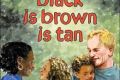
Black is Brown is Tan by Arnold Adoff
 Like others, I am thankful for this book because it was the first book in the United States that put an interracial family on the page. The illustrations are engaging but the text itself is difficult to follow unless you sing it. Doesn’t matter the tune you apply, just enter the story as a song and it will be easier to read although even with that approach, you will still, occasionally trip over the writing. Making maximum use of the canvass, the book shows the interracial family—a black mother, white father and their two children; one a boy, the other a girl—in a wide variety of scenes of life including ones with family members other than the parents. The text also addresses those differences between the mother and father being classified as “black and white” but not actually being those colors which is really good for the young child who is trying to sort how people are both brown and “black” or pink and “white” at the same time. Not that this text will clarify the issue for your little one but it at least acknowledges it. Other than that, the history behind this book, which has had many reprints since 1973 when it was first published, is laudable. The author is Arnold Adoff, the poet husband of celebrated author Virginia Hamilton. Adoff and Hamilton married in 1960, at a time when interracial marriage was still illegal in 28 U.S. states. Thirteen years later Adoff wrote this book for children like his own. It has been a mainstay of mixed heritage children’s literature for forty years.
Recommendation: Highly recommended as a part of literary history and an okay picture book with beautiful illustrations as well.
Reviewer: Omilaju Miranda
For My Family, Love Allie by Ellen B. Senisi
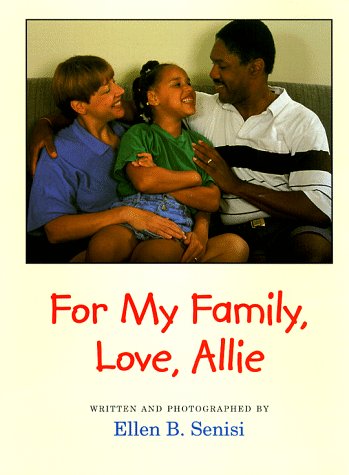 The author’s choice to illustrate the book with photographs instead of fine artwork adds a unique dimension to this book, which tells the story of Allie, a young, elementary school-aged girl who wants to make a gift for her family members that are visiting tomorrow. On the way to making something special, she helps her mother and grandmother cook dinner, tutors her siblings and makes a peanut butter and jelly sandwich for her brother. Her mom and grandma forget that Allie wants to contribute to the family gathering but when Allie has a dramatic response to her disappointment, she and her mother choose a gift for Allie to make. The reader gets to see Allie make her gift – peanut butter treats, and read of the sense of accomplishment Allie feels when finishing. As members of both sides of her family arrive, everyone bearing gifts, the story is filled with smiles, hugs, people cooking in the kitchen, barbecuing on the grill, and everybody playing children’s games. Right after people stop eating, worried that no one will taste the treats she made because they are full, but encouraged by her grandmother, Allie serves her treats to her family, all of whom, it turns out, actually did have just a little more room for a dessert made by young hands.
The dominant theme of personal accomplishment is accentuated by the author’s choice to use natural life (as opposed to staged) color photography. The reader feels like they are inside two days of Allie’s life which is very relatable. And to top off the “accomplish something yourself” theme, there is a recipe in the back of the book along with ideas for homemade gifts, easy for a child to create. Parents will enjoy reading this story with their children and making the treats and gifts listed at the end of the book.
Recommendation: Recommended; Ages 4+
Book Review by Omilaju Miranda

Jalapeno Bagels by Natasha Wing
 With beautiful illustrations from Robert Casilla, this story which reads like a training and orientation day in a bakery, comes to life. This is a first person narrative from Pablo, the son of a Mexican mother and Jewish father who own a bakery together. Pablo has to decide what to take to school for International Day and throughout the story as he helps his mother make Mexican pastries and his father make Jewish pastries, he questions if each pastry is the one he should take to his school. A story peppered with Pablo’s easy translations of his parents’ Spanish and Yiddish words of expression and names of food, makes one feel like they are in a regular day in the life of Pablo and his parents. On this day, Pablo decides to take Jalapeno Bagels to school because, like him, they represent the cultures of both of his parents. The back of the book contains two recipes and a glossary of the terms used throughout the book. While I think this is a valuable representation of a Mixed Heritage family of Mexican/Jewish ethnicities which gives some history of the two ethnicities, the most exciting aspect of the book is its title.
Recommendation: Unenthusiastically recommended for the sake of diversity representation; Ages 4+
Book Review by Omilaju Miranda.
Buzz by Janet S. Wong
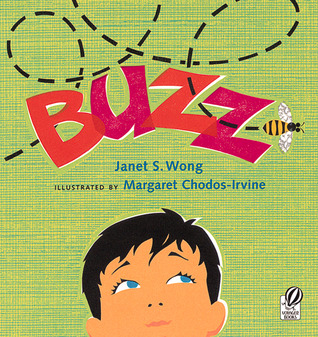 A preschool boy with a white father and Asian mother is the first person narrator of this story of his family’s morning rituals. He adorably mimics his father’s shaving and getting dressed and “helps” his mom make morning drinks. I like the way the author and illustrator integrate the natural environment into the text via the view through the open windows and the narrative language. Starting with the opening line describing a bee feeding from a flower, the lawn mower on the front lawn, and closing with the boy sniffing a flower, nature is the quiet secondary character in this story. Other fun and sensory stimulating aspects of the story are all the sounds of the morning. Like a child’s attention span, when the protagonist sits down to breakfast, his focus switches from his parents to playing with his airplane. This play is full of sounds and characteristically pre-school age clumsiness which ends in an accident that mom must clean up. Preschoolers will identify with that moment of being pulled out of their imagination into the real world by a spill they caused and still being kissed by mom despite the mistake. The illustrator, Margaret Chodos-Irvine, makes great use of the page, a number of times choosing to paint several scenes on one page. Although this story feels short, it is a fun and sensory stimulating read.
Recommendation: Highly Recommended; Ages 0-7
Reviewer: Omilaju Miranda

Mixed Blessing: A Children’s Book About a Multiracial Family by Marsha Cosman
 A good amateur writer’s effort at rhyming and cohesive story. The story is accessible and realistic, easily allowing a child to see the beauty of difference and how difference exists amongst people and animals. The rhyme is mostly on but off sometimes and she chooses some language that to me reads as raising mixed ethnicity to a superior level over non-mixed ethnicity but I’m just going to find a way to reword those two pages. The illustration is vivid and realistic.
Recommendation: Recommended; ages 3-6
Reviewer: Omilaju Miranda

An African Princess by Lyra Edmonds
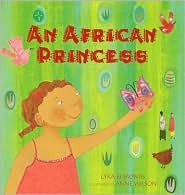 This is a lovely, simple story that deals with some complex identity issues without allowing any of those issues to feel heavy. A Mixed Heritage girl goes on a journey that affirms all the parts of her identity—Caribbean African Princess and United States acculturated, freckle-faced, city girl. At the center of this story is Lyra—a freckle-faced brown girl who lives on the tenth floor of an apartment building in the city but her mom tells her she is an African Princess. Starting with the light mentioning of Lyra’s African Princess ancestor captured from Africa and taken to the Caribbean, the story then moves to showing Lyra’s life as a city princess in the United States. Illustrated with collages, that make the reader feel like they are in the middle of an African Diaspora quilt world, the story of African quilts and robes that have traveled around the world as physical surviving representations of African heritage is shown without being told.
When the kids make fun of her for claiming to be an African Princess, Lyra’s family plans a visit to see her mother’s kin in the Caribbean. Daddy, from whom Lyra has presumably inherited the reddish hair and freckles, helps Lyra count down the days to the trip. In the Caribbean, Lyra’s great aunt, shows her quilts made by hand which they use as Lyra’s royal robes. Lyra’s aunt also explains that from the original African princess in their family who had many children—there are now African Princesses all over the world and Lyra is one of them. After the visit to the Caribbean, Lyra is stronger in her identity as an African Princess. I like the fact that she doesn’t have to give up any part of her heritage to be the African Princess descended from a long line of African Princesses.
Recommendation: Highly Recommended;Age: 5+
Reviewed by: Omilaju Miranda

Mixed: Portraits of Multiracial Kids by Kip Fulbeck
 From featuring Russian/Korean children who love soccer to Black/Indian children who like talking and drawing with their younger brothers, Kip Fulbeck’s highly acclaimed photo essay, which has traveled life sized as an art exhibition around the country presents photos of Mixed Kids with a description of their racial/ethnic backgrounds and a short essay from the parents or the child on their lives. Despite the photo of the child of multiracial African descent on the front cover, the book has more photos of children of multiracial Asian Descent (Hapa) than any other ethnicities. One of the most comprehensive sources celebrating mixed kids this reviewer has ever seen, a child with racial/ethnic heritages from all parts of the world will find several or more children with whom to physically identify, as well as get to know beyond the surface level, when reading this book.
Recommendation:Highly Recommended for all; Ages 0-Adult
Book Review by: Omilaju Miranda

TV movie “A Country Christmas Story”
 At the outset, this is the story of a small-town, white Appalachian mother and her “brown-skinned biracial” daughter who are living heartbreakingly poor lives in the Appalachian mountains of Tennessee three years after a divorce. The emotionally and economically burdened mother is inflexible in her demand that her daughter commit to math while the daughter wants nothing more than to sing and play guitar like her absent father. When the father returns, both parents think a black girl singing country music is a joke but Grace, (who reminds her parents that she is both black and white) and Grace’s teacher have set as their goal Grace winning Dolly Parton’s Teen Country Star of Tomorrow Contest. Grace and her teacher gain confidence by educating themselves and her parents on the history of blacks and interracial alliances in Country Music. But race relation history takes up less than five minutes of this T.V. movie.
The emotional pull of the story is multi-layered as three generations of mothers and daughters find themselves torn over the demons of their pasts of insecurity and self-doubt vs. their emotional freedom to support Gracie in pursuing her dream. Added conflict comes in the form of the feelings every family member and people in the town have about the father, Danny, who most think abandoned the family; the truth is much more depthful and contoured than a simple abandonment story. I’ll leave it at that since I don’t want to post any spoilers. The father is refreshingly more emotionally complex than a stock, machismo black man; the social spheres of these characters’ lives are filled with people invested in the characters and not the societal issues that influence their world. Even though Dolly Parton and NBC have shined a light on the existence of blacks and mixed people in an oft-forgotten part of the United States –Appalachia, this is a story about a girl’s family and small, country community supporting her as she follows her heart and the music on a path of family unity. I missed the original airing of this movie on NBC but I downloaded it for $0.99 from Amazon.com last night and, since it moved me to tears with great writing for t.v., unexpected plot twists and well developed characters who work their way through all sorts of complex mistakes—you should see this moving story.
Recommendation: Highly Recommended
Reviewer: Omilaju Miranda

Bluish by Virginia Hamiliton
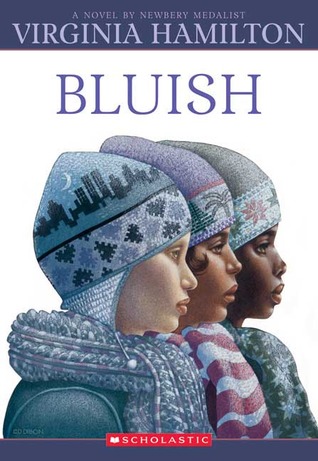 Most of the time I pick books for my children based on their experiences so they know they are not the only ones. Many times, I pick books to introduce adventures we plan to do or places we plan to go. Often I pick books that reinforce our family’s values or our ways of being. But sometimes I come across a book with a new character—a character with a life story we have not encountered yet, but I know we will.
The image on the cover of the book shows three girls in knit hats with varying skin tones and facial features. Natalie is identified as Jewish and Black and her mom bristles at the idea of kids calling her “Blewish”, not realizing her nickname “Bluish” has more to do with blue tint of her skin tone because of her illness. Dreenie and the third girl on the cover are never labeled with a particular heritage although Dreenie calls herself a “sorta sweet chocolate color” and calls Tuli “more honey color.” At one point, Dreenie’s little sister taunts her by saying, “I know who your mama ain’t, Drain. Because you sure ain’t one of us Anneva and Gerald Browns!” causing me to wonder if Dreenie was adopted but there is no more mention of this leaving me confused. But I am not the only one confused– honey-colored Tuli is right there with me. Tulifoolie pretends to speak Spanish singing out phrases, “chica-chica, do the mambo” and calling folks “muchcha” but is told by a Spanish speaking girl that she “gives Spanish kids a bad name.” Tuli lives with her grandmom in a not-so-good part of town. Tuli’s aunt is mentioned but never a mention of a mother or father–and no mention to confirm if she is indeed Latina. Your young reader might not have the need to know the exact heritage of Dreenie and Tuli and therefore might escape the confusion I experienced. All three girls play a major role in the story and present very different individuals who come together as friends. And that is a theme with which many readers can relate.
Recommendation: This book is appropriate for readers ages 9-14.
Reviewer: Amanda Setty
 Diverse Kids Books--Reviews