
Home » Asian Child (Page 3)
Category Archives: Asian Child

Dumpling Soup by Jama Kim Rattigan
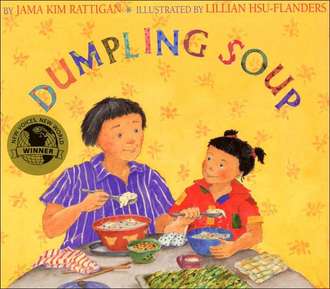 This first person narrative peppered with words from four different languages and a prominent grandmother character who speaks Korean almost every time she talks, was the 1990 winner of the New Voices, New World contest. Marisol, the protagonist narrates with such open vulnerability that the reader becomes easily attached to the story of her Hawaiian family’s New Year’s eve and her first time making dumplings for the Dumpling Soup, which is the most important first meal of the New Year. I can not say any better than the publisher that “Dumpling Soup is a rich mix of food, language, and customs from many cultures—Korean, Japanese, Chinese, Hawaiian, and haole (Hawaiian for “white”) The distinct traditions and heritage of each culture are not forgotten but play a vital part in this close-knit family’s life.” As cousins, aunts and even the grandmother of various heritages bring their different, ethnically distinct foods, speak their different languages, and use their different recipes and techniques for making dumpling soup to the protagonist’s and then, the grandmother’s home, readers from around the world see the reality of recognizing and loving people with, and for their differences instead of for the ways they are the same.
One of the small details that parents can discuss with their kids is the character Maxie. This is a cousin who the protagonist describes as haole but whose phenotype is Asian. The illustration of this cousin presents a great opportunity to discuss how people think of race and ethnicity differently i.e. how for this Hawaiian family, “white” is Asian, also. Because Marisol tells this story with the joy of participating in a family celebration and the anxiety over participating on a big girl level in that celebration, even as she carries us through the different scenes of the family fun, we never forget that Marisol’s sense of accomplishment and feeling of being valuable within the family depends on the decision her grandmother will make about whether or not to serve the dumplings that Marisol made. Accompanied by emotionally transparent illustrations, this is a beautifully told story that you and your child will enjoy.
Recommendation: Highly Recommended; Ages 4-adult
Reviewer: Omilaju Miranda

All the Colors of the Earth by Sheila Hamanaka
 Poetically, the children of this book become the natural bounty of the earth, their skin color and hair textures compared to the beautiful colors of nature and hair compared to the textures of other living creatures.
With typical sentences/stanzas like,
“Children come in all the colors of the earth—
The roaring browns of bears and soaring eagles,
The whispering golds of late summer grasses,
And crackling russets of fallen leaves,”
a child is able to glean a confidence-inspiring insight into their physical look. This is a beautifully illustrated book that lives up to the lyrical poetry of its narrative. The illustrations go far beyond the normal representation of the human rainbow and, with very detailed rendering of facial characteristics, skin complexions and hair textures, the reader sees real differences in many, many different ethnic types. On the pages of this book, children of every ethnic heritage will find reflections of themselves enjoying life and the world around them. While every physical type of child is represented in ‘All the Colors of the Earth,’ only interracial families are represented, which I think is an exceptional and novel choice however disappointingly inconsistent with the universal inclusiveness of the other illustrations.
Recommendation: Highly Recommended; Ages 3+
Book Review by Omilaju Miranda.

Everywhere Babies by Susan Meyers
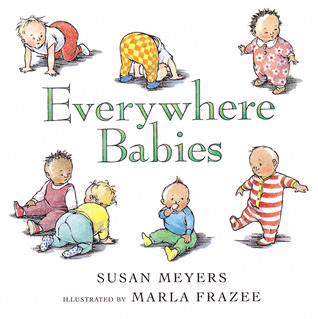 This sweet board book is a like a buffet of babies charming both children and adult readers. The author, Susan Meyers, and the illustrator, Marla Frazee, celebrate baby’s first year of life beginning with swaddled newborns, through all the late night rocking and feeding, into the crawling and playing, exploring life all the while and ending with a cake-covered baby on the first birthday. It is very clear Meyers and Frazee spent a lot of time just watching babies and families. It is also unmistakable they had a message when writing this book—diversity is joyful. We see light-skinned hands lifting a dark-skinned baby and a light-skinned baby reaching out for dark-skinned hands. We hear that babies can be fed “by bottle, by breast, with cups and with spoons.” We see two moms, single parents, two dads, twins, a variety of body shapes and sizes, grandmas and grandpas, and many combinations of skin tone. This book really is the I Spy of family diversity, so the reader will have no problem finding a picture that resembles himself and his family.
The one criticism I have for this book is we do not see any persons with physical disabilities. There is one grandmother holding a baby on her knee while her cane rests beside her, but no obvious example of a child or parent with a disability. We see babies crawling and one baby learning to walk, but it would have been lovely to have seen a child with a walker or braces on her legs. Beyond that, I have nothing but glowing remarks for this book. It is an old favorite of ours and my go-to present for 1-year olds, given that it ends with a birthday party. The closing of the book also speaks to me personally as the mother of an internationally adopted child. “Every day, everywhere, babies are loved—for trying so hard, for traveling so far, for being so wonderful… just as they are!” This simple inclusion of “traveling so far” always made me and my child feel as if the story was hers.
Recommendation: I highly recommend this book for ages 9 months to 3 years. It deserves a place on every book shelf in every home and every place of learning.
Book Reviewer: Amanda Setty

You’re Not My Real Mother by Molly Friedrich
 Molly Friedrich writes a spirited conversation between adoptive mother and child initiated by the Vietnamese daughter declaring “You’re not my real mother” to her mother. What follows is mother and daughter agreeing and laughing their way through an illustrated list of all the things that mothers and daughters do together. When the daughter revisits the issue of not understanding why her mother doesn’t look like her, the mother explains adoption to her daughter. I love the fact that this book deals with the issue of transracial adoption’s most obvious issue for the young child—that they don’t look racially like their parents— head on. By tackling that issue from the beginning of the book, this story respects children for their observation and insight. My three year old lost interest mid-book right after the mother and daughter hugged exalting kisses and parental gobbling of the child. I think she’s used to that sort of scene being the end of a story so an older child should voluntarily keep focus. The author says this is a story of the answer that poured out of her heart when she was faced with this challenge by her daughter. As such, accompanied by lively illustrations it feels incredibly sincere.
Recommendation: Recommended; ages for 4+
Book Reviewer: Omilaju Miranda
Families Are Different by Nina Pellegrini
 Nico, the protagonist, is the first person narrator who addresses the reader directly with an opening salutation before moving into the story of her adoption and six years of life. The language feels forced as if Nico is putting her life on display and she is the tour guide. The good thing about Nico’s “museum guide” voice is that even when she speaks of her confusion and sad feelings, she speaks with authority and knowledge which makes her trustworthy for the young child who may be trying to work their way through parallel experiences. I think Nico’s authority can be very empowering in the end when she discovers that although she is different from her parents, she is the same as everyone in her class because everyone has a different family composition. A child reading this may be encouraged to look at the families of her or his classmates and friends and see that there are many different family structures amongst them.
Recommendation: Unenthusiastically recommended for the message not the story; age 5+
Reviewer: Omilaju Miranda

I Love You Like Crazy Cakes by Rose Lewis
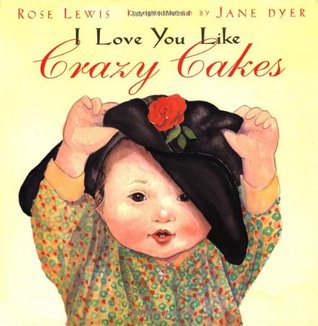 A sincere letter from a Euro-American adoptive mother to her adopted Chinese daughter, this is the first person story of the transcontinental infant/toddler adoption from the mother’s perspective. The language is sensitive and sincere as the mother tells her daughter about their lives before they lived together and their first few days together. Children will enjoy reading about a plane ride, feeling as if they traveled to a mysterious orphanage in China where every baby has a friend in their crib, and a magical connection between mother and child from the first moment they met. My heart warmed at the conscientious, emotional connection the adoptive mother voices, “I held you…and cried. The tears were for your Chinese mother, who could not keep you.” I believe many adoptive parents must feel a connection to the loss birth parents feel or may feel at releasing their child for adoption but this is the first time I’ve seen it on the page in a picture book. For many parents who have trouble expressing that dimension of their feelings to their child, the mother in this book can be their voice. Overall, I am impressed by way the delicate, watercolor illustrations show the adoptive mother’s dedication to integrating China into her daughter’s life. A joy to read.
Recommendation: Recommended; Ages 2+
Book Reviewer: Omilaju Miranda
In Our Mothers’ House by Patricia Polacco
 This is one of the best first person narrative children’s books I’ve ever read. The voice is so authentic I thought it was a children’s nonfiction story until I read the back bookflap. An African descendant woman tells the story of her life with her two mothers, Asian brother and carrot-top sister from their at-birth adoptions until their parents pass away, leaving the family home to the protagonist’s brother. Polacco’s narrative style is one of such candor and fluidity that as the protagonist shares with us the milestones of her life from becoming a big sister to seeing her mothers in dresses for the first time to finding emotional comfort in the home after her parents pass away , the reader is increasingly emotionally invested in their ever expanding world of friends, family and tradition. Polacco also includes the conflict of an anti-gay neighbor in the book, who turns the dial up on that confrontational anti-gay anger pretty high without actually saying “lesbian, gay, or homosexual.” The mothers handle the confrontation in a protective and reassuring manner that gives parents reading this book with children the freedom to explain as little or as much about sexual orientation as parents wish, including saying nothing about sexual orientation and just explaining that sometimes people don’t like others who are different. Illustrated with engaging animation and expressiveness, readers will see and feel a full spate of emotions as we do in real life. While the mothers demonstrate friendly touch affection towards each other and familial touch affection toward the children, for some, it will be important to see that the three children enter heterosexual marriages, framed in family portraits near the end of the book. The choice to show the oldest daughter and the son married to people within their “own” racial groups, demonstrates to me a silent acknowledgement of efforts made by the Italian and English-Irish mothers to encourage, support and preserve their children’s unique cultural identities. Complete with three children who grow up to become successful professionals with happy families of their own, In Our Mothers’ House is the multi-dimensional All American LGBT-parent family story.
Recommendation: Highly Recommended; ages 6+
Reviewer: Omilaju Miranda
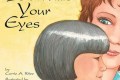
I Don’t Have Your Eyes by Carrie A Kitze
 Written with transracial adoptee children in mind, this book, with a series of lyrical statements, contrasting the differences in the physical appearances of children’s and parents’ body parts to the emotions, attitudes , and life perspectives associated metaphorically with the physical, sensorial, or functional purpose of the body part, communicates the conscientious and humane value system that parents teach and transfer to their children with such fluidity and beauty that you feel the text bringing you and your child closer and helping your child see the best in themselves and their depthful connection to you. In no cheesy, but a substantial, poetic, non-didactic prose, the book really conveys that who we are and who we help each other grow to be inside is what is valuable and what makes us family. The illustration is beautiful, realistic and includes illustrations of many different parent-child racial pairings including parents and children who share the same race but obviously different features so it doesn’t have to read as a book about “all of us racially different kids”; a child walks away from this book understanding that no one looks exactly like their parents but the loving way we navigate in the world is the offspring of our parents way of raising us.
Recommendation: Highly Recommended; Ages 4-12
Book Reviewer: Omilaju Miranda

Kimchi and Calamari
 Joseph Calderaro turns fourteen at the beginning of this engaging, humorous story of a Korean born Italian American kid who is thrown into a quagmire of emotions when, on the heels of his social studies teacher giving him ancestry project that makes him feel that he has no history or ancestral connections because he is adopted, his father gives him a corno for his birthday, as is the Italian cultural tradition in their family
While the major plot of the novel is Joseph’s search for his Korean mother and family, he also has a crush on a girl and teenage awkwardness to overcome. In this story that offers no dreamy endings, Rose Kent writes such a convincing and vulnerable narrative through Joseph’s first person voice that readers will laugh and cry growing close to Joseph and the people in his close circle. Readers will feel agitated with Joseph’s whining, tattle-tale younger twin sisters—the biological daughters of his parents, laugh with Joseph’s best friend who pushes him to do the search for his birth mother and hold their breath in empathy with his father whose fear of rejection and discomfort with the issue of Joseph being of Korean ancestry keeps him from even talking about Joseph’s birth nationality. Kent seamlessly weaves into the story the many ways in which Joseph feels inadequate as a Korean and rootless as an Italian. In addition to the disappointment of finding the “wrong” birth family, he also meets a Korean immigrant family who stereotypically own the Dry Cleaners and have a daughter who is an academic prodigy whose Korean language and cultural traditions exacerbate Joseph’s sense of being “un-Korean”.
At the center of the novel is the drastic and desperate action Joseph takes to hide the fact that he doesn’t know his Korean ancestry and the drama that unfolds and upturns Joseph’s life in the wake of his tortured decision. Ultimately, Joseph’s father breaks his silence, Joseph works to repair the relationships he has broken and his family strategizes an approach to integrating Joseph’s Korean roots into his Italian-American/Korean life. Anyone who likes to read will read ‘Kimchi and Calamari’ twice and love it. Others will read this book and find a powerful story of defining identity, being lost and found as a transracially, internationally adopted child.
Recommendation: Highest Recommendation; ages 9-14
Reviewer: Omilaju Miranda

Book Review for We Adopted You, Benjamin Koo by Linda Walvoord Girard
 This is a first person narrative from the perspective of the adopted child, Benjamin Koo Andrews. In it he tells his life history from birth to his current age—nine-years-old. His story discusses everything from being left at the doorstep of an orphanage when he was approximately 10 days old through his toddler years, early childhood, discovery of his racial difference from his parents and rebelling because he was adopted, adopting his sister and dealing with taunts at school. The book feels like a documentary but it is very informative and acknowledges a wide range of life experiences and feelings that a child who doesn’t share the race or country of his parents may face. The illustrations make the heaviness of the narrative approach a little lighter and this definitely is a book that I feel is a powerful tool for a parent to use to discuss adoption with their child; the text feels like it was written for that purpose moreso than anything.
Recommendation: Recomended; Age 6+
Book Reviewer: Omilaju Miranda
 Diverse Kids Books--Reviews