
Home » Posts tagged 'bilingual' (Page 2)
Tag Archives: bilingual

Sora and the Cloud by Felicia Hoshino
 Sora and the Cloud is like the children’s book version of a Murakami novel—a surreal adventure that leaves readers unsure what to make of it when it ends. The illustrations are lovely watercolor and ink on rice paper, adding convincing realistic detail to an imaginative story; it’s also written in English and Japanese, so bilingual parents can read the same story to their child.
The book starts out realistically enough: in the opening pages, Sora is a crawling baby. He learns to climb, walk, and as he gets older he makes his way up a tree. At the top of the tree, he cannot resist climbing onto a cloud, which takes him on an adventure through the sky. Sora and the cloud see skyscrapers, an amusement park, a festival of kites, and an airplane before they fall asleep together. Ironically, after falling asleep on the cloud, Sora dreams of realistic things like splashing in a big puddle or digging in wet sand.
Compared to monsters and villains from a lot of fairytales and other children’s tales, this surreal and beautiful journey would make a lovely bedtime story for any child, helping them drift off to sleep dreaming of fluffy clouds and pastel colors while learning some English and Japanese.
Recommended: 3-8 years.
Reviewer: Yu-Han Chao
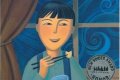
Ghosts for Breakfast by Stanley Todd Terasaki
 Stanley Todd Terasaki’s Ghosts for Breakfast is a read that Japanese American families may enjoy reading together, but that not every child will be able to appreciate.
The story begins with three old men knocking at the door to tell the young narrator’s family that they have seen ghosts in the neighboring field. This tale, as explained on the book jacket, is based on an experience of the author’s ancestor, and takes place in a Japanese American farming community in the 1920s. The body of the story provides no explanation of the time and place, and the vague setting might not grab or hold the attention of children who are looking for something more relatable. What may engage them is the comic flavor of the three old men, referred to as The Troublesome Triplets, and the scared feeling evoked by the ghosts they describe. The suspense builds as the narrator and his father go out to the neighbor’s field to investigate. (more…)
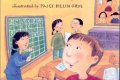
The Way We Do It In Japan by Geneva Cobb Iljima
 In the United States, much is made of accepting minorities and “exotic” cultures, but The Way We Do It In Japan reverses this scenario by dropping a little American boy, Gregory, and his mixed family (Jane from Kansas and Hidiaki from Japan) in the middle of Tokyo.
Gregory learns to do things “the way we do it in Japan” when it comes to bathing, sleeping, and speaking Japanese. But at school he finds that his peanut butter sandwich is “the wrong kind of lunch” as everyone else has rice, fish and fermented soybeans. The next day, however, the cafeteria makes peanut butter and jelly sandwiches for everybody to make him feel included. In real life, however, while this may very well happen in Japan, school cafeterias in the U.S. are unlikely to all of a sudden serve fish and fermented soybeans to show their acceptance of Japanese students. So is the message here that foreign countries will always whole-heartedly embrace Americans?
The illustrations that accompany this thought-provoking story are feature exaggerated facial features, and the father’s shifty-looking facial expressions can be particularly distracting. Despite that and the debatable lesson, this book still presents a positive model of cultural acceptance, and also teaches some Japanese terms, pronunciation, and culture.
Recommended: 4-9 years

Flowers from Mariko by Rick Noguchi and Deneen Jenks
 This book, written by husband and wife team Rick Noguchi & Deneen Jenks, is a real gem. It tells the story of a young Japanese American girl, Mariko, and her family as they return to California after being imprisoned in American concentration camps (also known as internment camps or relocation centers; simply referred to as ‘Camp’ by Japanese Americans of that time) during World War II. An authors’ note provides additional context at the end of the book.
I found this book to be excellent in several ways. To begin with, the artwork of Michelle Reiko Kumata is a revelation. It is apparent that the illustrations were based on actual black-and-white photos from the 1940s, but Kumata’s pictures bring the story to life in beautiful full color. Drawn with bold outlines, her pictures are full of patterns and textures from period fabrics, shadowing that adds depth to every scene, and subtle, authentic details such as the furoshiki-wrapped bundle that one woman carries on her way to Camp. Though the story’s subject matter is far from uplifting, it was still a joy to gaze at every page of this book. (more…)
Dust of Eden–a novel in verse by Mariko Nagai.
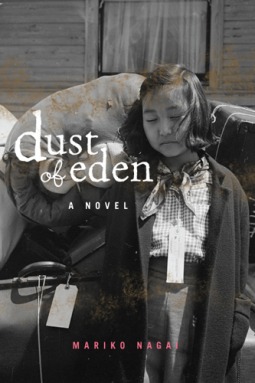 Mariko Nagai’s Dust of Eden is a lovely, spare story told by a young Japanese American protagonist who goes by both her American name, Mina, as well as her Japanese name, Masako. This book is a series of images and scenes that tell how a young girl in the United States in the 1940s navigates being both Mina and Masako, both American and Japanese, both feeling at home and feeling alien.
The novel is a set of poems from Mina’s point of view interspersed with letters to and from her best friend in Seattle as well as short personal essays Mina writes for school. These lyric pieces are arranged chronologically and geographically, with the first poem of the book titled “Seattle, Washington October 1941,” and the last poem called “Epilogue December 1945.” In the span between, Mina details her life in Seattle right before Pearl Harbor (a life filled with her parents, grandfather, brother, best friend, and school), and she writes us through her father’s unjust imprisonment in Montana after Pearl Harbor and her family’s internment first in Washington and then in Idaho, ending with her brother volunteering to fight for the Allies and her family finally being allowed to return to their Seattle home after the war is over.

December 13th, Atlanta, Ga: African Biracial Orphan Author Launches Two Family History Picture Books
 Nigerian-Hungarian Author Theresa Mamah has lived in the United States since she and her twin were orphaned at 13-years-old. The daughter of a Nigerian father and Hungarian Mother, Mamah knew Nigeria as home and Hungary as a destination for maternal-side family reunions and vacations. Preserving the family stories from both sides of her family has been the passion driving her creative endeavors and culminated in the publication of two children’s books, Ice and What the Baby Saw.
 She introduces both to the United States Reader at the book Launch, on Saturday afternoon, December 13th where she will be reading from, and signing copies of both books. Full information is on the featured poster and you can RSVP for free to attend. The book launch is from 1pm-4pm. Take your children out for an afternoon of literary fun featuring stories of international, intercultural focus
 Ice is the story of Mamah’s father as a child in Nigeria discovering ice for the first time and
What the Baby Saw is the story of Mamah’s aunt protecting her mother during WWII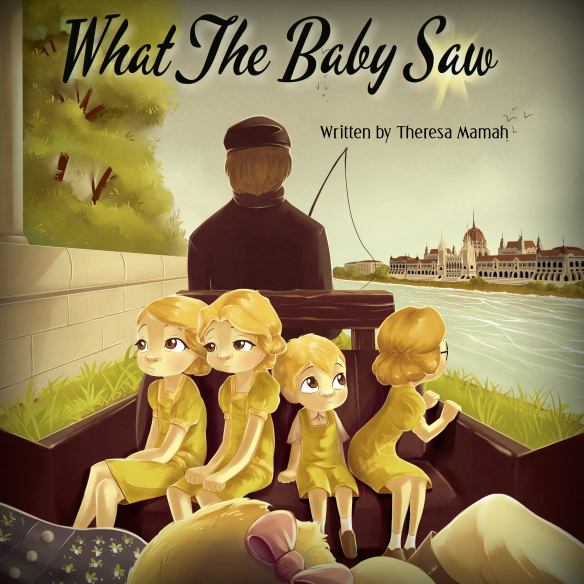
RSVP for book launch.

Calling the Doves By Juan Felipe Herrera
 California poet laureate Juan Felipe Herrera shares the story of his migrant farmworker childhood through powerful language and colorful illustrations (by Elly Simmons) in Calling the Doves.
Not once is Juan negative about his humble beginnings; he fills these pages with love and poetry. Born on the road to migrant worker parents in central California, Juan grew up in a one-room house his father built on top of an abandoned car he describes as “a short loaf of bread on wheels.” His father makes bird calls that attract doves and his mother recites poetry at dinner, all of this inspiring him: “I would let my voice fly the way my mother recited poems, the way my father called the doves.”
While the language is always evocative, one particular metaphor may confuse readers. All other metaphors work beautifully, for instance, he describes a green canvas as “a giant tortilla dipped in green tomato sauce,” and ”the wolves were the mountain singers.” However, when describing his family eating outdoors, “the sky was my blue spoon, the wavy clay of the land was my plate” may be taken literally by children (and some adults) who might have trouble making sense of these lines.
Besides that instance, this lyrical story accompanied by striking illustrations tell a story rarely seen in children’s literature, from immigration to migration according to the seasons of melon, lettuce, and grapes, to traditional healing arts. A wonderful celebration of migrant and Mexican-American culture, this book is a great way to teach your child poetry as well as diversity.
Recommendation : Highly Recommended. 6+
Reviewer: Yu-Han Chao

Otherbound by Corinne Duyvis
 Duyvis’ Otherbound is a tour-de-force in complications. The story is told through dual narrators, Nolan and Amara. Nolan, a bilingual Hispanic teenager growing up in small town Arizona, has a crippling neurological disorder, masked as epilepsy. This disorder has already cost him one foot and incurred massive medical debt for his working class family. In the past, Nolan’s disorder even caused hallucinations whenever he blinked. He is constantly aware of the burden he unintentionally places on his family and struggles to connect with those around him, his disabilities impairing him both physically and mentally. Nolan is also doing his best to hide a secret: the hallucinations never stopped. Every time Nolan closes his eyes his mind is transported into the body of our second protagonist, Amara.
Perfect Lil Blends by Luke Whitehead
 Perfect Lil Blends: A Reality Book that Celebrates the Diversity of Multicultural Children is like a series of love letters from parents to their children accompanied by their children’s portraits. Compiled by Luke Whitehead, the founder of Mixed Nation, this is a photo essay of children of mixed heritage from almost every racial, cultural, and ethnic background. Yes, most of these children are exceptionally beautiful however, similar to, but more personal than, Kip Fulbeck’s photo essay book Mixed, each photo of a child is accompanied by a description of the child’s life interests and a note of dedication from the parents to the child, making this more than a vanity book of portraits. (more…)

Good Dream, Bad Dream by Juan Calle and Serena Valentino
 Good Dream, Bad Dream turns a traditional meet-your-fears-head-on storyline into a global bilingual adventure. This book is about a boy, named Julio, who can’t get to sleep because he’s afraid monsters will terrorize his dreams. But his papa reassures him that every monster will meet its match when confronted with a bedtime superhero.
Every line of this children’s book features a different mythical hero from various cultures across the globe to fight a monster—a cunning companion for each devilish spirit, so to say. Grecian heroes defend the weak against Grecian monsters, African warriors fight African beasts, Mayan gods combat Mayan monsters, robots destroy evil aliens, and so on. To tell the tale, there’s even an accompanying bilingual Spanish translation to help teach young readers Spanish, or to make it easier for Spanish-speaking children to understand the storyline.
Seven talented artists came together to illustrate the vibrant, comic book stylized drawings in Good Dream, Bad Dream. The full-color pages offer visual cues into the characters of the various creatures and champions who make appearances in children’s’ minds all across the world. But on a negative note, those bright depictions may be too distracting for the child to clearly read the words on the page for themselves. So it would be best for the adult to read the story the first time, and to help the child follow along by trailing each sentence with their finger.
A former Kickstarter project, Good Dream, Bad Dream is available for purchase in October 2014.
Recommendation: Recommended (Just make sure you’re there to lend a hand if the child can’t make out the words on the distracting pages.) Ages 5-8.
Reviewer: Kaitlyn Wells
 Diverse Kids Books--Reviews