
Home » Posts tagged 'biracial mixed heritage' (Page 2)
Tag Archives: biracial mixed heritage

Always an Olivia: A Remarkable Family History by Caroliva Herron
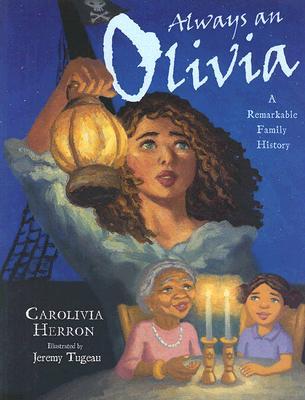
Heartbreaking, historically informative, and beautifully illustrated, Always An Olivia:A Remarkable Family History is the true family history of scholar and author, Olivia Herron (Nappy Hair) whose family has preserved their Jewish traditions even seven generations removed from the family’s Jewish matriarch. While the story is being told to a granddaughter in 2007 by her great-grandmother, the narrative actually tells the story of their ancestor Sarah who, hundreds of years ago, was the Italian Jewish granddaughter of victims of Jewish pogroms in Spain and Portugal. She is captured by pirates to be ransomed off but saved by another captive with whom she falls in love and sails to the USA to avoid recapture, death or the burning of the homes and businesses of the Jews to whom she was supposed to be ransomed. Still afraid of anti-Jewish violence, Sarah adopts the middle name Olivia instead of using her given middle name, Shulamit.
In the U.S., customs settles Sarah and her husband on the Georgia Islands in the free, black African Geechee community. Sarah and her husband have children and their children marry Geechees. Their descendants continue to practice the Jewish rituals that Sarah remembered (because, the text lets us know, she forgot many) including lighting the Shabbat candles on Friday nights. The women are the keepers of the tradition from being in charge of lighting the Shabbat candles to the legacy of naming a daughter of each generation Olivia or, as Sarah requested, a name that means “peace”. They choose to preserve the original name by naming a girl in each generation “Olivia” after Sarah.
From the opening line in which the girl child Carol Olivia asks her great-grandmother about black U.S.American slavery and is told that her family experienced enslavement in Egypt, witnessed U.S.American chattel slavery, but was not descended from enslaved black U.S.Americans, this biography is an eye opening account of the different histories of blacks and mixed racial heritage people in the U.S. since the 16th century.
Despite the book’s engagement of the heavy subject matter of slavery, racial and religious persecution, kidnapping, family separation, and near identity loss, there is a hopeful tone in the reading, achieved through James Tugeau’s use of light in his dramatic pastel illustrations, the tone of the narrative, and narrative breaks in the relaying of violence to fully describe life in peaceful times. Thus, this story of a resilient family communicates the necessity of remembering family history. Always an Olivia makes it clear that despite their family history of terror, renewal, survival and reinvention, the family of Olivias is proud of, and takes comfort in, their family traditions and heritage.
Recommendation: Highly Recommended; Ages 8-Adult (buy)
Reviewer: Omilaju Miranda

I Am a Ballerina by Valerie Coulman
 The pastel drawings of I Am a Ballerina are soft and subtle, and the story straightforward and sweet. Not overly pink and frilly, and not going too deep below the surface of a little girl exploring a new passion, this book would be a great read for children considering a new sport or interest.
After watching a ballet performance on her birthday, little Molly decides that she is a ballerina. At first her parents’ response to her leaping around the house in imitation of the gazelle-like picture of a ballerina on her wall is, “Jump down, dear.” When she smears her face with baby-blue eyeshadow and rouge, announcing herself as beautiful as a ballerina, her mother tells her to, “Go wash your face, dear.” Finally, after she nearly knocks some things over, her father concedes: “If you’re going to be a ballerina, maybe you should take some lessons.”
At Madame Cherie’s ballet school, Molly falls and trips, but it’s all part of learning. She practices and practices, and finally dons a merry-go-round horse costume for the ballet performance. The moment at the end of the book that Molly truly feels like she is a ballerina, however, is when her father lifts airplane-style: “It felt like flying. And then I knew…I am a ballerina.”
As seen in some “diverse” children’s books, the author plays it safe, saying nothing about ethnicity or appearance, even though the illustrator makes a point of creating a distinctly mixed family. Molly’s father is Caucasian or mixed, with curly brown hair and a bushy moustache, whereas her mother is Asian-featured. In this case, however, since it’s a nice ballet story that’s realistic and not overly pink and filled with tutus, I don’t mind that Asian-looking Molly isn’t identified ethnically or culturally (for all we know, her father is her stepfather, or she’s adopted).
Recommendation: Recommended: 4-6 years
Reviewer: Yu-Han Chao
I am Me by Karla Kushkin

Concisely written, Karla Kushkin’s I Am Me is a biracial little girl’s declaration of pride in both the physical characteristics that connect her to the people in her family as well as her self-pride in her individuality. She is a mixture of various characteristics of her father, her mother, and their respective families. Although the race or ethnicity of her father is not clear, he is a man of color, while her mother is Caucasian. With tawny skin and dark hair like her father and light green eyes like her mother, she is an apparent blend of two distinctly different ethnicities. Dyanna Wolcott’s illustrations emphasize the physical contrast between the two families (and the differences between the little girl and her parents) as they mingle together on an outing at the park filled with swimming, bike-riding, and a picnic. The text and illustrations are rendered in a manner that mimics a child’s innocent observations and the playfulness of the narrative and images makes this book visually and audibly attractive and relatable to a younger audience.
Recommendation: recommended ages 3+
Reviewer: LaTonya Jackson

Mommy, Why’s Your Skin So Brown by Maria Leonard Olsen
 The brown skinned, multiracial mixed heritage mother of two children who are lighter than her discusses with her children why she is darker than both of them and much darker than the son who has fair skin, silky blond hair, and blue eyes. The book reads as if the author simply transcribed a conversation that she had with her children. Her anger or annoyance with people who were asking the author if she was the nanny (according to interviews she has given) comes through evocatively in the tone of the narrative as well as on the book’s back cover blurb, which both address the necessity to admonish people to not allow their “curiosity to overwhelm their manners”.
That is a salient point that many parents of interracial families would like to communicate to those who rudely ask questions like “Are you the nanny?” “Is she adopted?” “Is that child yours?”, which confuse and sometimes sadden our children. However, in a children’s book, the tone of the mother’s frustration doesn’t communicate as a part of the children’s characterization and reads as the words of an angry author. It just doesn’t feel like it is from the children, and there’s nothing in the narrative to balance it off.
Points of the narrative that could have been the basis for beautiful illustrations of the entire family are missed. This conversation between the mother and her children is boring as a book read to a child and there are points that actually get confusing where the mother narrator is discussing where everybody got their different features (i.e. the mother speaks of getting her own dark skin from her grandmother, herself being a color in between both her parents, and her son getting blue eyes from his father and the mother’s grandfather) yet there are no images of the relatives to accompany this monologue.
This lack of illustration accompanied by no mention of the mother’s actual ethnicity (research into the author reveals she is biracial Filipina and this story is from her personal life) seems like a strong commitment to being vague. I’m sure the author doesn’t mention the ethnic heritages of her family so that the book could be used universally by the many parents of color of all ethnicities and races who face this scenario but because this book’s only story line is this family, the absence of a discussion of the family’s ethnicity and actual heritage leaves a palpable void. With no characterization for any of the characters in the book and a narration primarily from the mother’s perspective, sadly there is no story here. This is such a loss in part because this is the only picture book I’ve read that focuses primarily on the biracial child with almost exclusively Caucasian features. The other books which even present these children, present them as part of a duo led by brown biracial children or as part of an ensemble cast.
While I do not see this as an enjoyable read for children of any age as a standalone book, this book could easily serve as an interesting guide for adults on how to discuss this matter with their children and the points that can be covered regarding family features. If used in that matter, I would definitely suggest incorporating photos of the referenced family members into the conversation. (buy)
Recommendation: If your family is similar to the one in this book then, couple this book with your own family photos and exploration of your family tree or, for people with all types of family constructs and teachers, couple this book with either That’s My Mum by Henriette Barkow or My Mom is a Foreigner but Not to Me by Julianne Moore and this book can lead off the discussion of the serious aspects of a family dealing with people’s reactions to a mother (or father) looking racially different from her children.
Recommendations: For Adults to lead discussions on interracial families and phenotype differences.
Reviewer: Omilaju Miranda
Lulu’s Busy Day
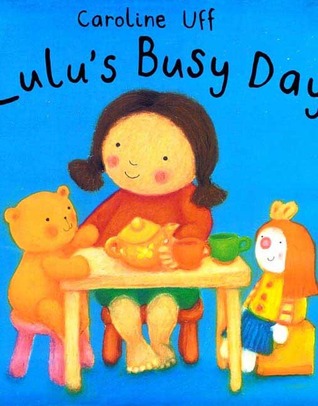 Lulu’s Busy Day is the sequel to Hello, Lulu and this time around we learn about the daily activities of our main character (while her heritage is again sidestepped). Drawing, visiting the park with a friend, and building castles is all in a day’s work for Lulu. While the first Lulu book visually suggests that she’s biracial by introducing us to her parents, this book also prefers to visually cue us in on her differences: her brown, puffy hair, dark eyes, and tan complexion. So while she looks a little different compared to many popular storybook characters, she still does all the same things as everyone else. Thus, this would be a good book to share with your child to introduce them to a diverse character—just make sure you point it out to your young reader.
Recommendation: Recommended to introduce young readers to diverse-looking characters; Ages 2-5
Reviewer: Kaitlyn Wells

Hello, Lulu by Caroline Uff
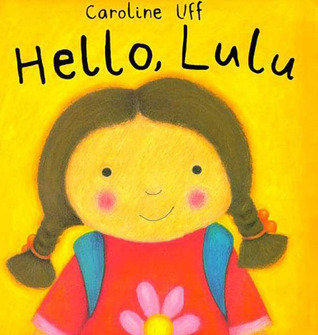 Hello, Lulu is a great book for beginner readers, but not necessarily the ideal book if you’re teaching your little one about diversity. The book introduces the reader to a little girl named Lulu and the important people and things in her life. The reader learns about Lulu and all of the members of her family. The board book itself features brightly colored backgrounds to help Lulu’s family members stand out. So while the illustrations visually cue us in on the family’s interracial composition, it’s never verbally explained. Thus, to bypass this subliminal message, you may want to point out the fact that Lulu’s parents are different races from the beginning. One other note: From learning about what Lulu’s favorite snacks are to how many pets Lulu has, your child is sure to notice a correlation or two in their own life (racial composition aside).
Recommendation: Recommended to introduce young readers to diverse-looking characters; Ages 2-5 (buy)
Book Reviewers: Kaitlyn Wells
The Wakame Gatherers by Holly Thompson
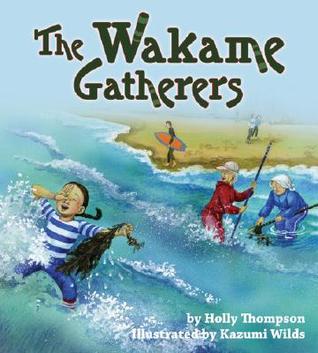 Holly Thompson tackles the difficult subject of war with grace and beautiful writing in The Wakame Gatherers. The book begins with a little girl saying, “My name is Nanami—Seven Seas—and I have two grandmothers from two different seas: Gram from Maine, and Baachan, who lives with us here in Japan.”
Gram visits Japan, and several pages are dedicated to descriptions and illustrations of the beaches of Maine and Japan, with particular focus on the local color of Nanami’s Japanese hometown. As a translator between her two grandmothers, Nanami helps them compare and contrast their two lands, learns about hooking and preparing seaweed as she takes care to “[use] the right language with the right grandmother.”
Then comes conflict: not in the present, but seeping through from history. The illustrations become dark and ominous as Baachan reminisces about the war. Nanami continues to translate, and understands, “when my grandmothers were my age they were enemies, their countries bombing each other’s people.” The two old women, through their shared granddaughter’s translation, apologize for their countries’ past actions, and in the space of two pages, a feeling of peace and happiness is restored as they return to wakame gathering.
With exquisite illustrations and vivid descriptions, The Wakame Gatherers brings together two cultures by not just acknowledging similarities and differences, but addressing the past. Of additional educational value at the end of the book are a fact sheet about wakame, a glossary of Japanese phrases, and three wakame recipes.
Recommended: Highly recommended. Ages 4-8.
Care Bears: Ups and Downs featuring mixed heritage protagonist
 ‘Care Bears: Ups and Downs’ features Jake, a child of mixed heritage whose family has just moved to a new town. Jake is afraid to make new friends but the Care Bears fly in on a care rainbow and help him open up to making friends. His mom (white) and dad (a man of color) are shown but there is no mention of their family’s ethnic heritage. There is a subplot that takes place in Care-a-lot about surprises and gratitude. Rated: G; length: 45 minutes. Ages: 3+; Recommendation: Highly Recommended.
 Diverse Kids Books--Reviews