

The Purim Superhero by Elisabeth Kushner
 This is the coolest story book, exceptional in that dialogue is plentiful—it is full of the realistic conversation that goes on between children and their peers as well as the adults in their lives. Nate has to decide what to be for the Purim Celebration at his synagogue but more importantly, he has to decide whether to be himself—a boy who wants to dress up as an alien— or a follower of the crowd. The crowd in this case is the group of boys in his Hebrew class who are dressing as superheroes. His fathers encourage him to be strong enough to be himself and he comes up with a surprise costume that makes him feel like he is true to himself and will be welcome with the boys in his class. I thought we would get through this entire story without discussing the way in which Nate’s family is different but ultimately as a part of the conversation encouraging Nate to be himself, he and his fathers make a reference to his fathers’ dedication to being their true self. However, conversation over his fathers being two dads instead of a mom and dad does not take up much space in this lovely story about an elementary child’s apprehension over being different from the group and the imaginative solution he finds to restore his confidence. A lovely story for every child who at some point will want to resist peer pressure to express him/herself.
Recommendation: Recommended; ages 4-7
Reviewer: Omilaju Miranda
Molly’s Family by Nancy Garden
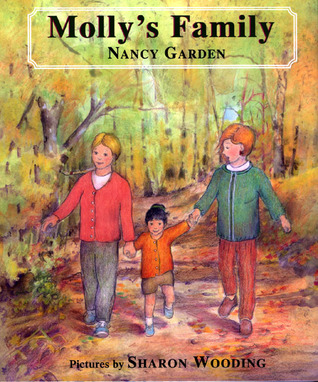 Kids don’t bite their tongue and with the blunt challenge of a six-year-old, Nancy Garden starts this story in which the protagonist, Molly responds verbally and emotionally to her classmate telling her that she can’t have the two mothers that she has drawn as part of her family make up. Molly’s mothers are her birth mother and adoptive mother (which is an important distinction in this category of books that have a strong representation of families made through adoption instead of one of the partners giving birth) but Molly doesn’t know those facts until later in the story when her mothers explain that to her . The teacher and a couple of Molly’s classmates are sympathetic to her hurt feelings and discomfort. Following the incident in the classroom, the teacher and then both of Molly’s mothers explain to her that the family you have is the family that is both possible and real. But the issue is not solved for Molly with these affirmations; she is still unsure of the validity of her two mother family, she is aware of her difference and has lost her confidence which is demonstrated by her leaving the drawing of her family at home on the 2nd day of the story. In a believable parallel with the process children whose home culture is significantly different from the societal norm go through to move from shame and insecurity to validation and acceptance of their families, it is only when the teacher tells Molly again that a child can have two mothers that Molly finally opens up to observing the ways that others are different and her family is real. Realistic illustrations and believable dialogue strengthen this story that gives a child of gay parents an understanding of their validity and other children an understanding of how families differ and live in harmony.
Recommendation: Highly Recommended; ages 5+
Reviewer: Omilaju Miranda

And Tango Makes Three by Justin Richardson
 So, did you know that there was a true story of two male penguins partnering for life, adopting a penguin chick and raising her? Neither did I until I reached the end of And Tango Makes Three, but this all happened at the Central Park Zoo and what a wonderful way for us to see that family takes all constructs in the animal world as in the human world. I think that the fact that this is a true story should have come earlier in the story, to make it more universally appealing as the wonder of it all is that the way the penguins manage their life as a couple and family is very similar to the way that humans find their way, emulating their hetero-normative parents and fellow citizens. Until I knew that this was a true story, I kind of felt like the book was agenda driven which was uncomfortable; once I knew it was a true story I was in awe at the universality of relationship experiences that may very well cross all species. Roy and Silo (the protagonist penguins) are good sitters to the egg given to them by the zookeeper, and when Tango emerges from the egg, they are good parents to her. Because of the straightforward comparative writing, I would say that this book is like a National Geographic story for preschoolers and elementary students with appealing illustration that makes entertaining use of the page. The story is one that everybody of all ages should know to increase awareness and acceptance in society. I tend to like stories that are strong in plot and character internally and independently whereas And Tango Makes Three depends a little too much on comparing the same-gender couple to opposite gender couples and penguin families for my tastes but there is value in informational picture books as well as those grounded solely in good story.
Recommendation: Recommended; ages 3+
Reviewer: Omilaju Miranda

My Mommy is a Boy by Jason Martinez
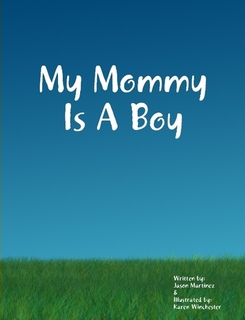 Often our best messages to young children are short, simple and honest. My Mommy is a Boy is just that. It is a story told from the point of view of a 4-year old girl about her female mommy becoming a male. This book addresses some of the questions a child of a transgendered parent might have such as, what to call mommy after she becomes a boy and why a person might want to change her gender. The story also reassures the reader that no matter the gender, the parent’s love for the child never changes. The illustrations match the simple nature of the book and remind me of a homemade book which is perfect considering ‘My Mommy is a Boy’ was written by a transgendered parent to express his love for his daughter.
Recommendation: Recommended for ages 4 and up.
Reviewer: Amanda Setty

Heather Has Two Mommies by Leslea Newman
 A book review page that gives pointed attention to lesbian and gay parent led families can only be complete with a review of this classic book which was the first book ever published in the United States featuring a daughter of two mothers. Out of print now, you will either find this book at your library or buy it through a used bookseller (used copies start at $13; new copies start at $29 plus shipping). The story is a straightforward narrative introducing the reader to Heather and her family, which includes her, her two mommies, a cat and a dog. When she goes to daycare, Heather learns that not having a dad is weird, which saddens her to the point of tears. The teacher and other children are sympathetic and discuss how their families have different relationships with father figures as well, from not having a father, to having two daddies, or grandparents as primary caregivers. The black and white pencil drawings add poignancy and depth to the story. Children and adults will also be drawn into the attention given to children’s participation and representation of their world as the children’s drawings of their families are shown to the reader. The text and illustrations evocatively portray the universal vulnerability of children in the face of feeling like an outsider, their dependency on parental love and the neighborly generosity they express when coming from loving homes.
Recommendation: Recommended; ages 3-8
Reviewer: Omilaju Miranda
Uncle Bobby’s Wedding by Sarah S. Brannen
 This lovely story of family bonds in a guinea pig family. Chloe loves her uncle Bobby and is opposed to his getting married to Jaime because she doesn’t want to be unimportant. Her mother explains that when adults love each other that much they want to be married and encourages Chloe to speak to her uncle about her worries. When Bobby, Jaime, and Chloe all spend time together, Chloe realizes she will gain a second wonderful uncle when Bobby and Jaime get married. Then, she endorses their marriage and agrees to be the flower girl at the wedding. On the day of the wedding, she saves the day when Bobby and Jaime forget things necessary for the ceremony. Brannen does a great job of carrying us through Chloe’s emotional changes and showing us how a strong bond with an adult can make a child feel confident that they are the most important part of the adult’s life.
Recommendation: Recommended; Ages 3+
Reviewer: Omilaju Miranda

King and King by Linda de Hann and Stern Nijland
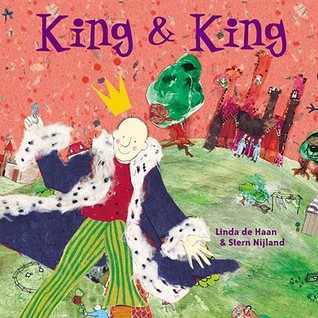 A quirkily illustrated fairytale of a prince whose mother, the queen requires that he get married so she can have some time to herself. After a succession of princesses come to woo him, he falls in love with a prince chaperoning another princess visiting to woo him. The story is simple and easy to follow and a nice way to introduce children to the fairy tale of what may have been the story of their two dads’ beginning.
Recommendation: Recommended; ages 5+ .
Reviewer: Omilaju Miranda

A Tale of Two Mommies by Vanita Oelschlager
 All dialogue, this rhyming book is a conversation between the adopted son of two others and his friends while the protagonist and his friends play on the beach. As they run, play ball, swim, and have other beach fun, the questions and answers volley in sets of two. “Which mom is there when you want to go fishing? Which mom helps out when Kitty goes missing?” “Mommy helps when I want to go fishing, Both mommies help when Kitty goes missing.” The narrative continues in such a trajectory until it includes answers in which the protagonist says he is the one doing certain things. This is a full portrait of the emotional and activity life of a family from the perspective of a child who is increasingly taking on responsibilities. The child happens to be the African-Descendant child of two white moms but that is not discussed. This is a story with which every child who has taken note of how their parents nurture and mentor them, can identify.
Recommendation: Recommended; ages Ages 2-8
Reviewer: Omilaju Miranda
A Mother for Choco by Keiko Kasza
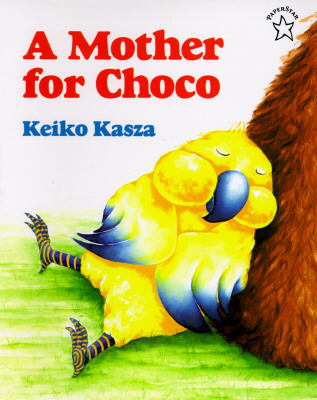 I am so impressed with this book. Love this story. Slightly reminiscent of Dr. Seuss’ Are You My Mother, Choco is a yellow and blue chick who needs a mother. Many of the animals of the forest tell him they can’t be his mother because he doesn’t look like them until Mrs. Bear takes him in, lets him define what makes a mother and, upon doing those things, the two decide that she is his mother despite the fact that she doesn’t look him. At his new home, Choco has three siblings who are all different species of animal—none of them a bear. This felt so good to read, and the illustrations were rollicking fun. Every home should have this book but I think this is an especially easy way to help a little one see transracial adoption family structure as fun and “normal”.
P.S. My daughter immediately identified the bear as Choco’s mother before the story concluded that it would be so, which I think is a sign that we create “normal” for our children.
Recommendation: Highly Recommended; Ages 0-10
Reviewer: Omilaju Miranda

When Kathy is Keith by Wallace Wong
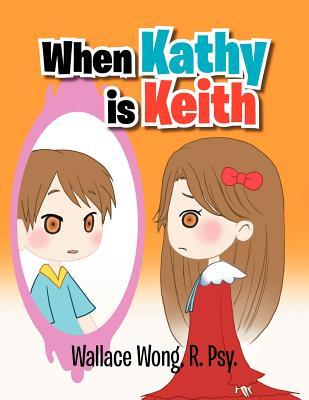 Written by a clinical psychologist, this book is more of a short illustrated manual on childhood transgendered identity than a children’s story. It is written in simple language that a child can easily follow but I don’t know how enjoyable it would be for a child to read or have read to them but it would be very valuable to guide a parent and other adults in the life of a child who sees themselves as the opposite gender in the practical steps to take to attend to the identity supportive needs of a trans child. The book starts with an intro to Kathy and the different scenes of her life in which she showed and voiced her interest in being a boy, then moves the reader through the steps that Kathy’s parents take to help Kathy live as a boy at home and at school. At the end of the book there is a short list of resources to support the family with a transgendered identified child.
Recommended Age: 5+ for non transgender identified children; as young as parents feel appropriate for transgendered identified children.
Reviewer: Omilaju Miranda
 Diverse Kids Books--Reviews