
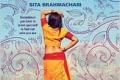
Jasmine Skies by Sita Brahmachari
 When I heard Sita Brahmachari had written a sequel to Artichokes Hearts (Mira in the Present Tense) I could not wait to get my hands and eyes on it. Like a memorable character does, Mira had gone on living in my mind and I was excited to see where her creator had taken her. But while Brahmachari’s second novel does continue to focus on Mira and includes character references from her previous book it did not feel like a sequel or a continuation from the first novel. So while it did not satisfy my curiosity, it does mean this book can stand on its own. A reader can begin with Jasmine Skies and not feel lost.
Jasmine Skies reintroduces the reader to Mira Levenson at the age of 14. After the passing of her grandfather, family ties were tenuously rekindled and Mira is on the way to Kolkata, India to meet her grandfather’s side of the family for the first time. In her bag she has letters taken without permission from her mother. Mira believes these letters hold the clues to discover the reason her grandfather never returned to India and why Mira’s mother and her same aged cousin, Anjali, stopped speaking. Despite the strained relationship, Mira is excited to be staying with Anjali and her daughter, Priya for three weeks. She is excited to meet members of her family for the first time and to get to know Kolkata, the place her grandfather told her stories about all her her life.
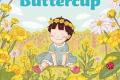
New Release– East Asian Baby Protagonist: Little Baby Buttercup by Linda Ashman
 As no father is ever mentioned or portrayed, Little Baby Buttercup and her mother seem to be a single parent family–a happy, adorable one. The rhymed lines by Linda Ashman and sweet illustrations by You Byun make this a pleasure to read: “Little Baby Buttercup, look how fast you’re growing up! Every day brings something new—lucky me, to be with you.”
From morning to evening, Baby Buttercup eats messily at her highchair, builds block towers, goes to the park, plays with a dog, hides from the rain, reads bedtime stories with Mommy, and (more…)


Sora and the Cloud by Felicia Hoshino
 Sora and the Cloud is like the children’s book version of a Murakami novel—a surreal adventure that leaves readers unsure what to make of it when it ends. The illustrations are lovely watercolor and ink on rice paper, adding convincing realistic detail to an imaginative story; it’s also written in English and Japanese, so bilingual parents can read the same story to their child.
The book starts out realistically enough: in the opening pages, Sora is a crawling baby. He learns to climb, walk, and as he gets older he makes his way up a tree. At the top of the tree, he cannot resist climbing onto a cloud, which takes him on an adventure through the sky. Sora and the cloud see skyscrapers, an amusement park, a festival of kites, and an airplane before they fall asleep together. Ironically, after falling asleep on the cloud, Sora dreams of realistic things like splashing in a big puddle or digging in wet sand.
Compared to monsters and villains from a lot of fairytales and other children’s tales, this surreal and beautiful journey would make a lovely bedtime story for any child, helping them drift off to sleep dreaming of fluffy clouds and pastel colors while learning some English and Japanese.
Recommended: 3-8 years.
Reviewer: Yu-Han Chao

Hannah’s Way by Linda Glaser
 Inspired by a 1996 exhibit at the Minnesota History Center named Unpacking on the Prairie: Jewish Women in the Upper Midwest, comes a heartwarming picture book written by Linda Glaser and illustrated by Adam Gustavson. Hannah’s Way tells the story of Hannah, a young school age girl who has moved with her family from Minneapolis to a new town in northern Minnesota. The reader is brought along with Hannah as she overcomes the anxieties of moving to a new school and trying to make new friends. The central conflict hinges on her class picnic falling on a Saturday, the day of rest for Orthodox Jews in which they cannot work or ride in cars. As the story unfolds Hannah tries desperately to appease her family and her religious beliefs, while also wanting to make new friends that will love and accept her.
Gustavson’s illustrations are detailed works of art with a feel of historical authenticity. The images are large in scope, depicting Hannah’s world with a narrative power as strong as the story.
Hannah’s Way is an uplifting story not only for those who have felt isolated due to religious differences, but for any school age child who has had to move from a previously familiar place to a new home. Although Hannah struggles to balance what it means to be true to her faith, while also wanting to fit in with her classmates, at the end of the book she learns an unexpected lesson about kindness that will move any reader.
Recommendation: Highly Recommended Ages 3+
Reviewer: Erin Koehler
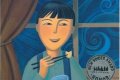
Ghosts for Breakfast by Stanley Todd Terasaki
 Stanley Todd Terasaki’s Ghosts for Breakfast is a read that Japanese American families may enjoy reading together, but that not every child will be able to appreciate.
The story begins with three old men knocking at the door to tell the young narrator’s family that they have seen ghosts in the neighboring field. This tale, as explained on the book jacket, is based on an experience of the author’s ancestor, and takes place in a Japanese American farming community in the 1920s. The body of the story provides no explanation of the time and place, and the vague setting might not grab or hold the attention of children who are looking for something more relatable. What may engage them is the comic flavor of the three old men, referred to as The Troublesome Triplets, and the scared feeling evoked by the ghosts they describe. The suspense builds as the narrator and his father go out to the neighbor’s field to investigate. (more…)
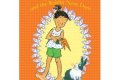
Lulu and the Rabbit Next Door by Hilary McKay
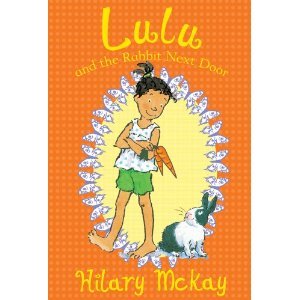 Lulu and the Rabbit Next Door is part of a series of books by Hilary McKay that chronicle the adventures and misadventures of quirky, seven-year-old, brown-skinned Lulu and her equally eccentric and mischievous sidekick/cousin/best friend, Mellie. In this book, their adventure begins when Arthur moves in next door with his pet rabbit, George. Arthur begrudgingly accepted the rabbit as a gift from his grandpa and, to appease his mother and grandfather, he gives the rabbit minimal attention and care—often leaving him stuck in a cage for days with very little exercise. In lieu of “rabbit-napping”, Lulu and Mellie devise a playful scheme that eventually coaxes Arthur into spending more time caring for George. In the end, he also gains two new friends in Lulu and Mellie. (more…)

Lulu and the Duck in the Park by Hilary McKay
 In Lulu and the Duck in the Park, Lulu and Mellie’s adventure begins when two dogs become unleashed at the park during their class trip. Admist the foray, ducks’ nests were disturbed and eggs were broken—except one egg in particular that Lulu whisks into her pocket to protect it. She carries the egg back to school with her and tries her best to keep it a secret—for a short while, even from her friend Mellie. Her secret becomes too difficult to withhold as the egg slowly begins to hatch under her sweater which sets off a series of peculiar and laughable antics from Lulu.
The main character, LuLu, has an audacious personality and knack for mischief that is reminiscent of protagonists like Amber Brown and Junie B. Jones; but, instead of having a penchant for bubblegum, she loves animals and, notably so, she is a little brown girl. Readers who were acquainted with Lulu in the Lulu board books will remember that Lulu’s parents are a white mom and brown-skinned father of African Descent. These books are a fun read, the plots are humorously suspenseful, and the narratives are written seamlessly in age-appropriate language that I think will captivate young readers’ attention. I would highly recommend both of these books for boys and girls who are being introduced to longer texts and building their endurance for following a more complex narrative; surely, they will not have a problem with “seeing” themselves in gutsy, little Lulu.
Reviewer: LaTonya R. Jackson

Nina and the Traveling Spice Shed by Madhvi Ramani
 If your readers like the Magic Tree House series, they will probably be interested in Nina and the Traveling Spice Shed. Nina is a British Indian, who really would like nothing to do with India. At school, Nina’s class is doing projects on foreign countries and despite her parents’ strong suggestions she wants to report on any country BUT India. Yet, she arrives late to school and the only country left is India. Not able to face her parents and her disappointment after school, Nina visits her eccentric Aunt Nishi. Aunt Nishi sends her to the spice shed in her backyard and that is where Nina’s traveling adventures begin. Nina’s first stop—there are more books to come—is predictably India. She discovers India is more than “hot weather and poor people”. (more…)
The Way We Do It In Japan by Geneva Cobb Iljima
 In the United States, much is made of accepting minorities and “exotic” cultures, but The Way We Do It In Japan reverses this scenario by dropping a little American boy, Gregory, and his mixed family (Jane from Kansas and Hidiaki from Japan) in the middle of Tokyo.
Gregory learns to do things “the way we do it in Japan” when it comes to bathing, sleeping, and speaking Japanese. But at school he finds that his peanut butter sandwich is “the wrong kind of lunch” as everyone else has rice, fish and fermented soybeans. The next day, however, the cafeteria makes peanut butter and jelly sandwiches for everybody to make him feel included. In real life, however, while this may very well happen in Japan, school cafeterias in the U.S. are unlikely to all of a sudden serve fish and fermented soybeans to show their acceptance of Japanese students. So is the message here that foreign countries will always whole-heartedly embrace Americans?
The illustrations that accompany this thought-provoking story are feature exaggerated facial features, and the father’s shifty-looking facial expressions can be particularly distracting. Despite that and the debatable lesson, this book still presents a positive model of cultural acceptance, and also teaches some Japanese terms, pronunciation, and culture.
Recommended: 4-9 years
 Diverse Kids Books--Reviews